



Did you know that the average Amazon seller wastes over 33% of their ad budget on non-converting search terms and poorly timed bids? This equates to thousands of dollars in lost margins escaping your bottom line every single month. In an increasingly competitive e-commerce landscape, running manual bidding strategies or relying on rigid rules-based software simply cannot keep pace with shifting consumer patterns.
To scale profitably today, successful brands are shifting to advanced ai advertising tactics. By utilizing raw predictive power to automate complex decision-making, an ai ads ecosystem operates 24/7 to adjust bids, harvest keywords, and minimize wasted spend. In this comprehensive guide, we will unpack how smart algorithms can capture market dominance and outline the ten most powerful ways to automate your brand's advertising.
Discover how AdAstraa's game-changing AI marketing system can automate your bidding and scale your profits with guaranteed efficiency.
Book a Free Live Demo of AdAstraa Today! →
The Real Cost of Manual Amazon PPC Management: Why Brands Waste up to 30% of Ad Spend
Many seller teams log onto Seller Central several times a day to adjust bids manually. While they intend to optimize performance, manual amazon ppc management is inherently flawed. Human action cannot digest the complex, multi-dimensional stream of Amazon ad data across dozens or hundreds of ASINs in real-time. By the time a media buyer analyzes yesterday's search term report and changes a keyword bid, market conditions have already moved, leaving massive amounts of cash on the table.
Let's look at the numbers. An advertiser running manual campaigns faces structural limitations that lead to high ACoS (Advertising Cost of Sales) and depleted margins:
- Lagging Feedback Loops: Making manually calculated changes relies on delayed reports, meaning you have already overpaid for non-performing traffic.
- The Click-Bleed Effect: Non-converting, off-target customer queries can exhaust your daily budgets by noon, leaving you completely invisible during peak evening conversion hours.
- Inconsistent Bid Optimization: Keeping up with competitor activity manually would require adjusting bids every hour, every day of the week—including holidays and weekends.
To illustrate the stark contrast, review this comparison between traditional manual operations and automated advertising management:
| Feature / Metric | Manual PPC Management | AI PPC Automation |
|---|---|---|
| Bidding Frequency | Daily or Weekly basis | Continuous (24/7/365 adjusting) |
| Keyword Pruning | Manual Excel analysis, slow extraction | Instant harvesting & automated negation |
| Ad Creative Testing | Ad hoc and rarely updated | Rapid algorithmic variation testing |
| Budget Efficiency | Poor (budgets run out early) | Optimized (dayparted and dynamically shifted) |
To succeed at scale, FMCG brands and high-volume sellers are replacing spreadsheets with automated amazon ppc advertising strategies. This shift frees up valuable manual management hours while ensuring that every spent cent actively drives conversion. For a deeper understanding of how these mechanisms work, consult our pioneering AI advertising strategies resources.
Under the Hood: How AI Advertising Tools Automate Amazon Campaigns
Modern machine learning models operate exponentially faster than traditional "if/then" rule systems. While early-generation bid adjusters simply raised or lowered bids based on static target metric rules, advanced ai advertising tools construct a multidimensional matrix of real-time variables. They weigh the interactions between dozens of signals to find the optimal bid value for every second of the day.
These predictive engines analyze essential inputs, including:
- Buyer Intent Density: Pinpointing whether a shopper is merely browsing or is ready to make an immediate purchase.
- Inventory Levels: Lowering bids on low-stock products to prevent losing high-value organic rankings due to stockouts.
- Historical Conversion Patterns: Utilizing granular temporal data, understanding that conversion rates may double on Friday nights compared to Tuesday mornings.
- Competitor Activities: Detecting competitor pricing shifts, rating drop-offs, or out-of-stock statuses to instantly capture their traffic.
Through the integration of dedicated marketing analytics ai, software platforms translate complex transactional data into direct campaign actions. Instead of executing blanket keyword adjustments, these systems compute exact bid elasticities. This means they discover the precise point where raising your bid yields more profit, and where it starts to erode your margins. For a solid foundational look at these automated processes, dive into our in-depth Amazon PPC guide.
10 Proven Ways to Automate Amazon Advertising for Peak Performance
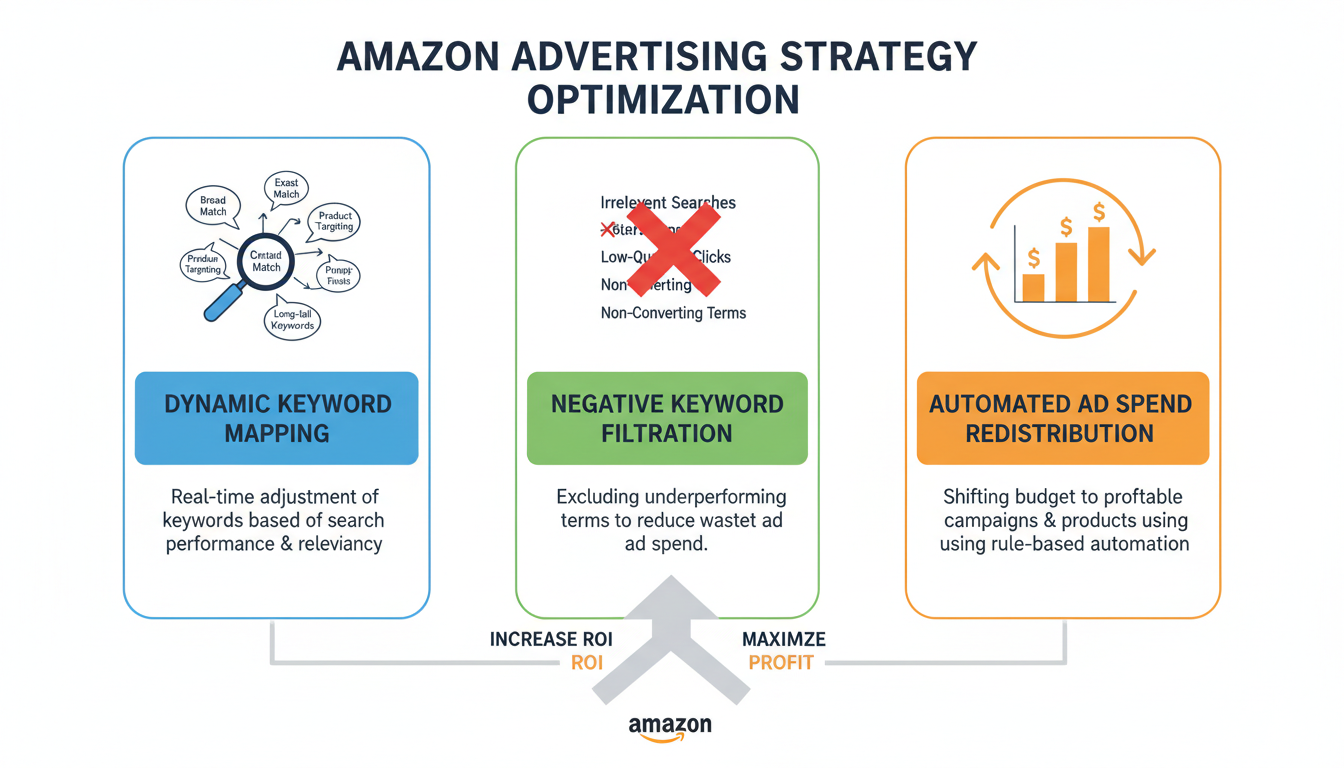
Structuring a successful amazon advertising strategy doesn't mean letting technology operate entirely blind. Instead, it involves configuring a robust, sophisticated automated framework designed to maximize visibility and safeguard your margin. Here are the ten most powerful, proven strategies to transform and automate your Amazon campaign performance.
1. Dynamic 24/7 Keyword Bid Adjustments
Traditional bidding software relies on sporadic Amazon API calls, updating bids once per day. True AI automation runs continuous micro-calculations. If conversion patterns spike mid-afternoon, the AI automatically positions your product at the top of search listings. Conversely, as conversion rates cool overnight, it scales the bids back to prevent useless clicks on automated ads, securing a breakout increase in return on ad spend (ROAS).
2. Automated Search Term Harvesting and Negative Keywords
Uncovering profitable search terms in manual search term reports takes hours of focus. An automated amazon ppc tool continuously monitors your automatic and broad match campaigns. When the algorithm identifies a high-converting search query, it instantly escalates it to an exact match. Simultaneously, terms that fail to convert over a set threshold are automatically designated as negative keywords, putting a definitive stop to budget bleed.
3. Dynamic Multi-Campaign Budget Allocation
Campaign budgets often stagnate in isolated silos. High-performing Sponsored Products campaigns run out of daily funding while low-yield portfolios retain idle capital. A smart ad campaign automation tool balances budgets globally. It automatically funnels excess dollars into high-margin campaigns during peak commercial periods, raising the floor on your entire catalog's true profit.
4. Contextual Inventory-Aware Ad Pausing
There is nothing more damaging than spending thousands of dollars in ad spend only to drive customers to an out-of-stock detail page. If your supply chain stumbles, manual adjustments are often too slow. AI-driven systems integrate directly with your stock count. The second inventory registers a critical low, the software automatically pauses active campaigns, redirecting ad spend to healthier listings and protecting your conversion-to-rank ratio.
5. Competitor ASIN Outbidding and Placements
Conquering manual conquesting campaigns requires agonizing keyword tracking. Sophisticated ppc automation technology continuously monitors your primary competitors' price points, reviews, and stock levels. If a competitor increases their price or their rating drops below three stars, the AI instantly triggers aggressive bids on their ASIN page placements, claiming their market share during moments of competitor vulnerability.
6. AI Ads Creative Optimization
Creating visual formats for Sponsored Brands and Sponsored Display can present serious operational roadblocks. An ai ad creator or ai advertisement generator builds multi-format creative variations in seconds. By deploying an advanced visual platform like AdAstraa's AI-fueled creative hub AdCreative+, you can automatically test click-generating headlines and stylized product mockups to visually outperform stagnant listings.
7. Pattern-Based Holiday and Seasonal Bid Adjustments
During competitive events like Prime Day, Black Friday, or Q4, bid wars erupt within minutes. Traditional bidding systems struggle, while manual bidders freeze under pressure. AI predictive systems evaluate historical holiday data trends to preemptively shift aggressive bid floors. They automatically secure premium ad placements before the morning traffic rush and step down bids gracefully as soon as the shopping holiday concludes.
8. AI-Driven Cross-Selling and Portfolio Optimization
Modern marketing focuses heavily on customer lifetime value (LTV). Intelligent cross-selling tools scan your purchase logs to bundle items automatically. They target existing buyers with specific Sponsored Display retargeting ads, showcasing matchable secondary products. This effortless approach maximizes revenue per customer while keeping cold user-acquisition costs low.
9. Multi-Marketplace Global Campaign Localization
Expanding your brand into Europe, Japan, or Latin America introduces complex currency conversions and language barriers. Modern ai software for marketing translates your high-converting keyword structures while accommodating localized search patterns. The software normalizes international bid thresholds according to localized marketplace demand, enabling seamless cross-border scale.
10. Predictive Intent-Based Funnel Building
Top-of-funnel campaigns are frequently abandoned because tracking cross-channel performance is exceedingly difficult. By tying your metrics to an advanced buyer intent framework—such as AdAstraa’s Shopper OS buyer intent toolkit—your brand maps exact intent steps. The ecosystem automates bid scaling based on off-Amazon interest points, ensuring that you target warm prospects who are statistically prone to buy.
Put your bids, keywords, and campaign budgets on an intelligent Autopilot that updates 24 hours a day, 7 days a week.
Activate Your Ad Optimization Autopilot →Real-World Case Study: How FMCG Brand "PureGlow" Cut ACoS by 38% With AI PPC Automation
To fully grasp the game-changing value of automation, consider "PureGlow Wellness," an FMCG retailer offering catalog listings of skin and dietary supplements. Operating a catalog of 42 high-volume ASINs, their internal marketing team spent more than twenty manual hours every week managing campaign structures, altering keyword bids, and weeding out manual failures inside Excel sheets.
Despite their constant manual labor, PureGlow faced a severe plateau: their blended baseline ACoS hovered around a discouraging 41%, and key manual budgets frequently dried up by 2:00 PM, starving them of lucrative evening shopping sessions. Competing brands constantly undercut their price points and captured elite detail page placements.
PureGlow decided to swap their manual processes for AdAstraa's comprehensive best amazon ppc automation software platform. The onboarding and transition yielded dramatic improvements within weeks:
- First 14 Days: The platform's automated engine identified 1,420 non-converting search terms and blacklisted them. Real-time dayparting schedules shifted active budgets to target high-intent evening windows.
- Day 30: The AI system automatically gathered 128 new long-tail terms from automatic test pools, instantly scaling those into high-efficiency phrase and exact campaigns.
- Day 60: Leveraging seamless inventory synchronization, the software preemptively paused ads on three high-velocity ASINs experiencing supply chain gridlock, protecting organic rank.
Ultimately, PureGlow's baseline ACoS dropped from 41% to a highly sustainable 25.4%, while total advertising revenue surged by 49%. The brand reclaimed over eighty management hours every single month, allowing their strategic team to prioritize growth, launch fresh product variations, and construct sustainable market leadership.
Leveraging AI Ad Creators to Scale Visual Campaigns Effortlessly
Bidding optimization is only one half of the modern performance equation. The other critical half is your visual asset library. Standard Sponsored Brands, custom video spots, and Sponsored Display placements demand eye-catching creatives to command shopper focus. Historically, generating clean visual variations meant commission costs, complex design programs, and long photo preparation delays.
Today, utilizing a dedicated ai ad creator or an ai ads generator streamlines this painful visual pipeline. This technology crafts hyper-realistic product lifestyle mockups, adds text overlays, and develops standard Amazon compliance graphics in moments. Here is why making the shift to automated creative production is a must-know strategic move:
- Rapid A/B Testing: Generate and test twenty unique custom background settings in the time it used to take a human designer to finalize a single design asset.
- Instantly Compliant Layouts: Visual platforms natively scale outputs to meet strict Amazon technical guidelines, preventing annoying, costly campaign rejections.
- Enhanced Conversions: Engaging brand graphics capture higher average click-through rates (CTR) compared to boring, sterile white-background images.
By blending bidding automation with creative design platforms like AdCreative+, brand managers build an unbeatable feedback loop. The math is simple: highly optimized bids combined with beautiful, high-converting visual creative guarantees superior ROAS and sustainable scale.
A Checklist for Choosing the Best Amazon PPC Software
With dozens of platforms claiming performance improvements, finding the best amazon ppc automation software or ppc software tools can feel daunting. Media buyers often select simple, rigid rules engines disguised as intelligent artificial systems. To protect your advertising spend, refer to this must-know vendor checklist during your selection process:
- Continuous Bid Optimization: Does the platform adjust bids dynamically, or does it rely on daily batch uploads? True AI platforms execute ongoing adjustments based on time, conversion elasticity, and real-time inventory signals.
- Holistic Inventory Synchronization: Does the bid platform integrate seamlessly with real-time stock levels? To preserve rankings and prevent budget waste, your software must pause campaigns when inventory runs dangerously low.
- Native Profit Tracking: Can the system compute true profit metrics, including TACoS? Acquisition tools often ignore shipping fees, return rates, and FBA fees. Select options that analyze your entire business profitability.
- Algorithmic Creative Engine: Does it include modern creative features? Superior growth tools offer unified visual features like an ai ads creator to streamline visual testing.
By assessing your options against these criteria, you will avoid restrictive software tools and partner with an adaptable, intelligent growth platform. To read more about optimizing your entire operations, see the latest strategic deep dives featured on our insights on our Amazon advertising blog.
Summary: Reclaim Your Hours and Secure High-Margin ROAS with AdAstraa
Continuing to configure bids and manage negative keywords manually in the modern Amazon environment is a losing battle. The sheer velocity of competition, shifting bidding thresholds, and evolving target metrics require automated, intelligent management. By putting advanced ai for marketing systems at the core of your growth, your business stops budget leaks, automates complex operational workflows, and unlocks exceptional ROAS.
AdAstraa is designed to meet this precise need. Combining our groundbreaking Autopilot bid optimizer, Shopper OS intent tracker, EcomGPT operations module, and AdCreative+ layout engine, we deliver a powerful, all-in-one suite. Stop wasting valuable hours inside messy spreadsheets and activate highly-profitable, autonomous brand scale.
Put an end to costly keyword bleed and manual spreadsheet fatigue. See how AdAstraa's premium AI platform drives conversion scale with guaranteed ease.
Book a Strategy Call →Additional Resources
- Amazon Advertising Solutions Console — Official portal, specifications, guidelines, and direct tools for marketplace sellers.
- Statista Retail Research & Market Insights — Global e-commerce trends, baseline spending analysis, and shopping platform stats.
- Federal Trade Commission Guidance on Truthful Advertising — Vital compliance principles for digital marketing, statements, and brand disclosures.
- Small Business Administration (U.S.) Guide on Managing Ad Budgets — Tactical frameworks on budget thresholds, brand allocation, and cash reserves for operational growth.