


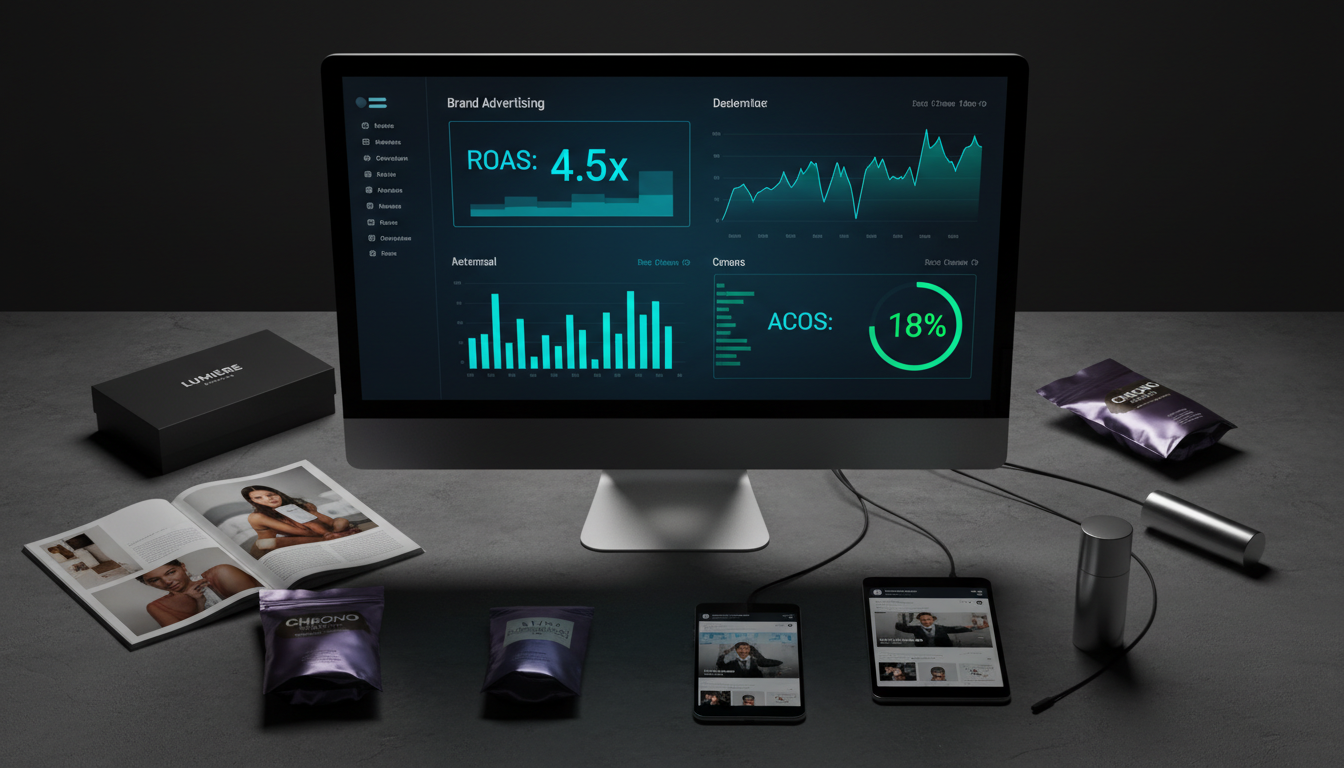
Here's a number that should stop you cold: brands waste an estimated 26% of their total advertising budget on non-converting keywords, misaligned targeting, and poorly timed bids. For a brand spending $50,000 a month, that's $13,000 — gone.
If you're an Amazon D2C seller, FMCG brand, or agency managing multiple ad accounts, you already know the pain. You pay for advertising, watch your ACoS creep upward, and wonder where your ROAS went. The problem isn't that brand advertising doesn't work — it's that most brands are doing it without a proven system.
This guide breaks down 7 essential, battle-tested strategies that transform how you pay for advertising, so every dollar you put in works harder, converts smarter, and compounds over time. Whether you're running Sponsored Products, Sponsored Brands, or full-funnel brand ads — these steps will change your results.
Stop Bleeding Ad Spend
See how AdAstraa's AI cuts wasted spend and boosts your ROAS — in real time.
Start Your Free Trial Today →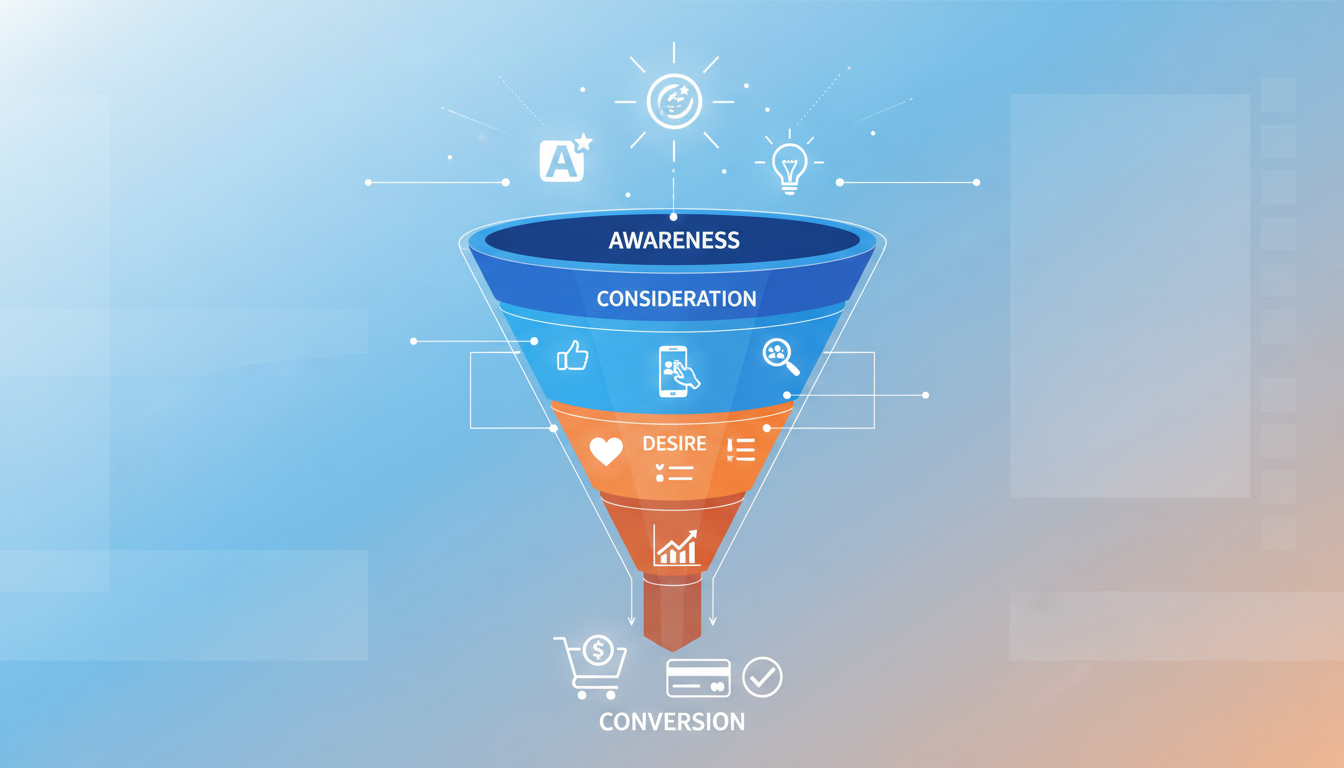
1. Master the Payment Models Before You Spend a Single Dollar
Most brands jump into advertising without fully understanding how they're being charged. This is where unnecessary costs begin. There are three primary ways you pay for advertising: CPC (cost-per-click), CPM (cost-per-thousand-impressions), and CPA (cost-per-action). Each model carries different risk profiles and fits different goals.
On Amazon, Sponsored Products and Sponsored Brands are CPC-based — you only pay when a shopper clicks. This makes them performance-driven by design. But choosing the wrong payment structure for the wrong objective can torch up to 35% of your budget before generating a single sale, according to ad pricing model research.
CPC vs. CPM: Which Model Suits Brand Advertising?
For brand awareness campaigns — reaching new audiences who don't yet know your product — CPM models work well because you're paying for eyeballs, not clicks. For conversion-focused brand ads on Amazon, CPC is your weapon of choice. You pay for intent-driven traffic, and every click is a signal that the buyer is already in purchase mode.
The breakthrough insight? Aligning your payment model to your campaign objective is the single most overlooked lever in brand advertising. Get this right, and your entire strategy becomes more efficient from day one. Explore AdAstraa's AI advertising tools to see how intelligent systems automatically match bid types to campaign goals.
- CPC: Best for Sponsored Products, Sponsored Brands — ideal when purchase intent is high
- CPM: Best for top-of-funnel awareness, Display, and DSP campaigns
- CPA: Best for performance-based retargeting and affiliate-style brand programs
2. Define Your True Profit Per ASIN Before Setting Any Budget
Here's the brutal truth: most brands set advertising budgets based on revenue targets, not profit margins. They calculate ROAS but ignore fulfillment costs, returns, Amazon fees, and COGS. The result? You can hit a 5x ROAS and still be losing money on every unit sold.
The game-changing approach is to anchor your entire ad spend strategy to True Profit per ASIN — the actual net margin left after all costs are deducted. This metric tells you the maximum you can afford to pay for advertising on each product before it becomes unprofitable.
How to Calculate Your Target ACoS
Your target ACoS is simply your net margin percentage. If your product generates a 30% net margin after fees and COGS, your maximum allowable ACoS is 30%. Spend more than that on ads and you're subsidizing Amazon, not building a brand.
AdAstraa's Shopper OS intelligence layer provides real-time True Profit visibility per ASIN, so your bidding decisions are always anchored to actual profitability — not vanity metrics. This is how serious brands shift from guessing to governing their ad spend.
"Amazon advertising revenue grew 24% to $47.4B in 2024, with Sponsored Products driving 65% of total ad spend." — Ryze AI Amazon Ads Benchmarks Report, 2026
With the marketplace this competitive, understanding your numbers isn't optional — it's the foundation of every smart dollar you pay for advertising.
3. Ruthlessly Eliminate Non-Converting Keywords from Brand Ads
Non-converting keywords are the silent killers of brand advertising budgets. They burn through spend, inflate ACoS, and deliver zero revenue — yet they're often invisible in standard reporting views because their individual costs look small. Multiply that across hundreds of keywords and thousands of impressions, and you have a serious leak.
The proven fix is a rigorous negative keyword protocol. Every week, run a search term report, identify terms with more than 10 clicks and zero conversions, and add them to your negative keyword list. This single habit can reduce wasted spend by 15–25% within 30 days.
How AI Makes Keyword Pruning Effortless
Manual keyword audits are time-consuming and easy to deprioritize. This is where AI-powered automation delivers an essential advantage. AdAstraa's Autopilot runs 24/7 bid optimization, automatically identifying and suppressing non-converting search terms so your brand ads stay focused on buyers, not browsers.
Rather than reviewing hundreds of rows in a spreadsheet each week, your team can focus on strategy while Autopilot handles the granular work. Discover how AI advertising strategies can cut wasted spend without sacrificing impression share on your top-converting terms.
| Keyword Type | Action | Expected Impact |
|---|---|---|
| 10+ clicks, 0 sales | Negative match immediately | Reduce wasted spend 15–25% |
| High ACoS, low ROAS | Lower bid by 30%, monitor | Improve ACoS by 8–15% |
| Low ACoS, high volume | Scale bid by 20–40% | Grow revenue 20–35% |
| Branded keywords | Always protect and fund | Defend market share |
4. Build a Powerful Branded Ads Defense Layer
One of the most overlooked strategies in brand advertising on Amazon is defending your own brand name. Competitors regularly bid on your branded keywords, siphoning off shoppers who are already searching for you — buyers who are practically guaranteed to convert. If you're not paying for your own branded ads, you're handing sales to your rivals.
Branded ads — ads triggered by your own brand name — typically deliver the lowest ACoS and highest ROAS of any campaign type you'll run. These are warm audiences. They already know you. The only job of your branded ad is to make sure they see you first when they search.
Sponsored Brands: The Ultimate Brand Awareness Tool on Amazon
Sponsored Brands campaigns appear at the top of search results with your logo, a custom headline, and multiple products. This is your storefront-in-a-search-result — a powerful way to establish brand recognition while capturing purchase intent simultaneously. According to Amazon's own data, advertisers who use Sponsored Brands alongside Sponsored Products see measurably higher new-to-brand customer rates.
Pair Sponsored Brands with AdCreative+ AI-generated ad creatives to test multiple headlines and imagery combinations at scale — without the manual overhead of traditional A/B testing workflows.
5. Use Buyer Intent Intelligence to Pay for Advertising That Converts
Not all shoppers are created equal. A buyer searching "best protein powder" is browsing. A buyer searching "Optimum Nutrition Gold Standard 5lb vanilla" is buying. The essential skill in brand advertising is identifying and prioritizing high-intent search terms — those that signal a shopper is ready to purchase, not just explore.
This is where buyer intent intelligence becomes a game-changing advantage. By analyzing search behavior patterns, purchase signals, and category-level demand data, you can front-load your ad spend on the keywords and audiences most likely to convert — and dial back spend on exploratory queries that drain budget without delivering sales.
Real-World Example: How Intent Data Transforms Brand Ad ROI
Consider a mid-sized supplement brand spending $18,000/month on Amazon ads with a 42% ACoS. After implementing buyer intent segmentation — separating brand-aware, category-aware, and purchase-ready audiences into distinct campaigns — they reduced their ACoS to 27% within 60 days while increasing total attributed sales by 31%.
The spend didn't change dramatically. The intelligence behind the spend changed everything. AdAstraa's Shopper OS platform provides exactly this kind of structured buyer intent data, turning raw search volume into a precision-targeted brand advertising system.
🔍 Intent Segmentation Framework
- Tier 1 — Buy Now: Exact branded + specific product terms → Max budget, aggressive bids
- Tier 2 — Compare: Category + competitor terms → Moderate bid, conversion-focused copy
- Tier 3 — Browse: Generic broad terms → Minimal budget, awareness goals only
6. Invest in Breakthrough Ad Creative That Stops the Scroll
You can have perfect targeting, an optimized bid strategy, and a flawless keyword structure — and still fail if your ad creative is generic. In a crowded marketplace, ad creative is the conversion multiplier that either amplifies your strategy or neutralizes it.
Amazon's own data shows that advertisers using the Image Generator tool for Sponsored Brands reported a 20%+ increase in campaign submissions and nearly 5% boost in Gross Merchandise Sales. Compelling, relevant visuals don't just look better — they demonstrably drive more revenue per dollar spent.
Step-by-Step Creative Testing for Brand Ads
The most effective brand advertising teams run continuous creative testing cycles — not one-and-done launches. Test your headline copy (benefit-led vs. feature-led), your primary image (lifestyle vs. product-only), and your CTA phrasing. Give each variant at least 7–14 days of data before making decisions.
For brands that can't afford a full creative team, AdCreative+ generates Amazon-optimized ad creatives using AI — reducing creative production time by up to 80% while maintaining brand consistency across every campaign and ad format.
- Establish a creative baseline — your current best-performing ad set
- Generate 3–5 creative variations per campaign using AI or a creative team
- Run all variants simultaneously with equal budgets for 14 days
- Pause underperformers, scale winners by 30–50%
- Repeat the cycle every 30 days to continuously raise the performance floor
AI-Generated Brand Creatives
Generate high-converting Amazon ad creatives in minutes — not days.
Explore AdCreative+ Free →7. Automate Bid Management to Guarantee You Never Overpay for Advertising
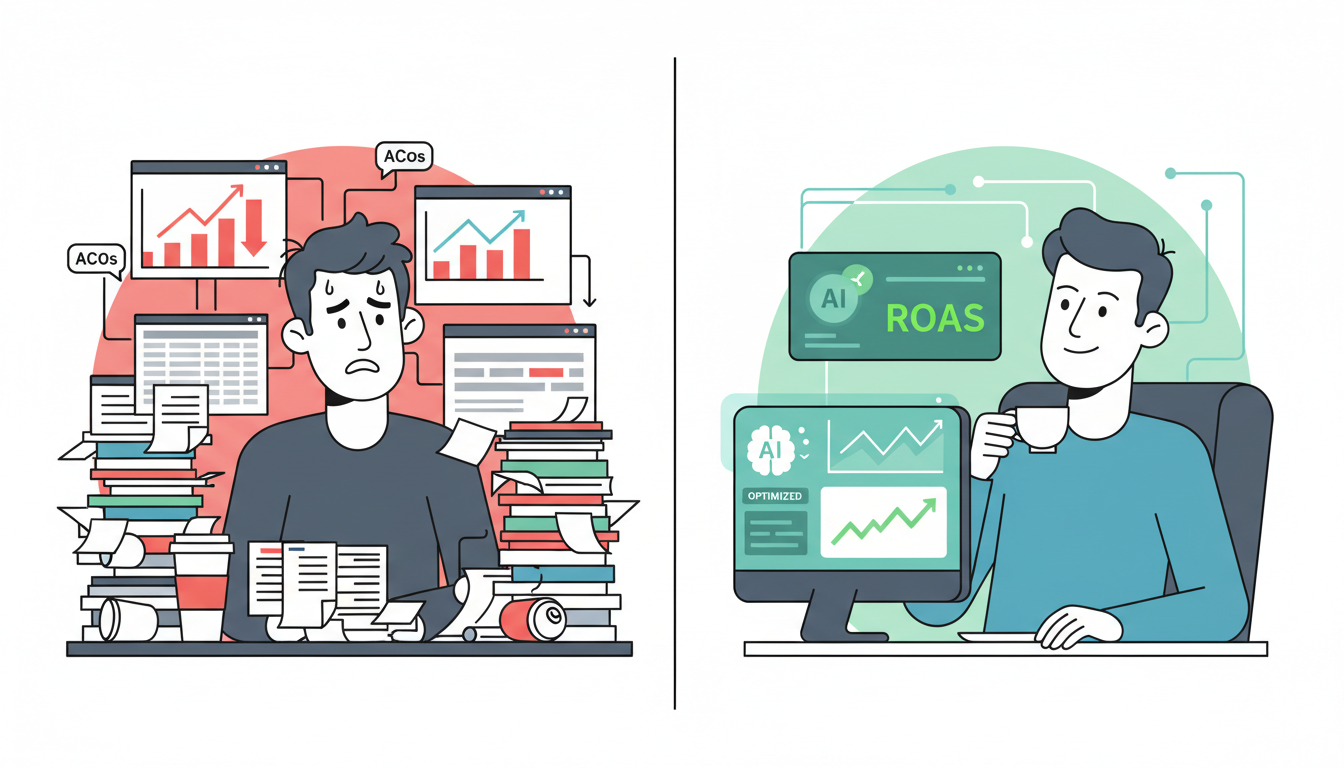
Manual bid management is the single biggest operational bottleneck for growing Amazon brands. Markets move in real time. Competitor bids change hourly. Search volume spikes without warning. A human checking bids once a day — or even once a week — is perpetually behind the curve, either overpaying during low-competition windows or missing scale opportunities during high-conversion periods.
The ultimate solution is 24/7 automated bid management powered by AI. Rather than reacting to yesterday's data, AI systems respond to live signals — adjusting bids up when conversion probability is high and pulling back when traffic quality drops. This is how brands consistently achieve ACoS ranges of 20–30% while competitors operating manually sit at 35–50%.
The Autopilot Advantage: Always-On Brand Advertising Optimization
AdAstraa's Autopilot engine continuously processes bid adjustments across every keyword, campaign, and match type — without your team needing to lift a finger. It's not just rule-based automation. It's predictive intelligence that learns from your campaign history, your product margin data, and real-time marketplace conditions to make bid decisions that a human analyst simply can't match at scale.
Brands using AdAstraa's Amazon PPC optimization system consistently report reclaiming 10–15 management hours per week while simultaneously improving ROAS by 20–40%. That's the compounding power of always-on automation applied to brand advertising.
⚡ Automation vs. Manual Management: The Gap
- Manual teams review bids 1–2x per week — AI adjusts bids every hour
- Manual management misses night and weekend conversion windows
- AI captures off-peak low-CPC opportunities that humans consistently overlook
- Automated systems scale without headcount as your catalog and budget grow
Bringing It All Together: The Brand Advertising System That Scales
These 7 strategies don't work in isolation — they compound. When you understand your payment model, know your true profit per ASIN, eliminate wasted spend, defend your branded keywords, use buyer intent to target smart, invest in high-impact creatives, and automate your bids, you stop randomly paying for advertising and start systematically investing in growth.
The brands winning on Amazon right now aren't necessarily the ones with the biggest budgets. They're the ones with the most intelligent operating systems behind their advertising. Every dollar is tracked. Every bid is optimized. Every creative is tested. Every keyword decision is anchored to real profit data.
This is the standard that AdAstraa was built to help every brand reach — through its suite of purpose-built AI tools that remove manual overhead, eliminate waste, and deliver the kind of measurable, scalable performance that turns brand advertising into a reliable growth engine. Explore the full platform on the AdAstraa overview page.
Additional Resources
Deepen your understanding of brand advertising, ROI measurement, and Amazon ad strategy with these authoritative external resources:
- Amazon Ads: Best Practices for Sponsored Products — Official Amazon Ads guide covering campaign setup, targeting, and performance optimization for brand advertisers.
- HubSpot: 2026 Marketing Statistics, Trends & Data — Comprehensive benchmark data covering ROI by marketing channel, helping brands allocate budgets with confidence.
- Amazon Ads Benchmarks: ACoS, ROAS & CPC by Category 2026 — In-depth benchmark data across 15 Amazon product categories to help brands set realistic performance targets.
- Seller Assistant: Top Amazon Advertising Strategies — Practical breakdown of the most effective Amazon advertising strategies for brand growth and market share expansion.
- Marketing ROI Statistics 2025–2026: Benchmarks by Industry and Channel — Channel-by-channel ROI data that helps brand advertisers understand where their payment for advertising delivers the strongest returns.
The Bottom Line: Pay for Advertising Like a Pro
Brand advertising on Amazon in 2025 is not a game of spending more — it's a game of spending smarter. The brands that win are those who treat every payment for advertising as a precision investment, not a cost center. They know their margins, defend their branded real estate, cut waste without mercy, and let AI handle the optimization work that no human team can match at scale.
The 7 strategies in this guide aren't theoretical. They're the operational playbook of high-performing Amazon brands that are lowering ACoS, increasing ROAS, and compounding their growth quarter over quarter. Implementing even two or three of these immediately will have a measurable impact on your next 30-day performance report.
AdAstraa is built to help you execute all seven — seamlessly, intelligently, and at the speed the Amazon marketplace demands. The only question is: how much longer can you afford to wait?
Ready to Transform Your Brand Advertising?
Join hundreds of Amazon brands using AdAstraa to cut waste and scale profitably.
Autopilot bidding. Buyer intent intelligence. AI creatives. All in one platform.
Get Started Free — No Credit Card Required →