
The Paradigm Shift in Amazon PPC: Moving Beyond Legacy Advertising
The Amazon marketplace has transitioned from a straightforward e-commerce marketplace into a highly sophisticated, ad-dominated product search engine. Today, organic real estate on search result pages is shrinking, replaced by Sponsored Products, Sponsored Brands, and Sponsored Display placements. This transition has turned amazon pay per click ads into an absolute necessity rather than an optional tool for sellers. With over 60% of consumers starting their product searches directly on Amazon, the competition for search visibility is at an all-time high, making an optimized amazon advertising campaign essential for commercial viability.
However, this gold rush has created massive inflation in customer acquisition costs. Modern e-commerce brands face a landscape where cost-per-click (CPC) rates are rising steadily year-over-year. According to industry research, such as Ad Badger's comprehensive study on Amazon Ads benchmarks, while conversion rates on Amazon remain remarkably high (averaging around 11.55%, which is roughly seven to eight times higher than typical e-commerce platform conversion rates), escalating CPC means brands can easily bleed capital if their bids are not highly optimized in real-time. Managing this volatility manually is simply no longer viable.
Historically, brands and agencies turned to basic ppc software for amazon to manage their bids. These early automation marketing tools operated on static, "if-then" logic. For instance, a user would program a rule: "If the ACoS of a keyword exceeds 35%, reduce the bid by 10%." While this offered a temporary reprieve from manual adjustments, it was inherently reactive. Rule-based amazon ppc automation tool platforms do not understand real-time market fluctuations, sudden inventory outages, or competitor behavior. In contrast, modern artificial intelligence ads represent a paradigm shift. Utilizing self-learning algorithms, an autonomous AI-powered Amazon advertising operating system AdAstraa processes thousands of real-time signals to proactively adjust campaigns, optimize budgets, and preserve brand profit margins.
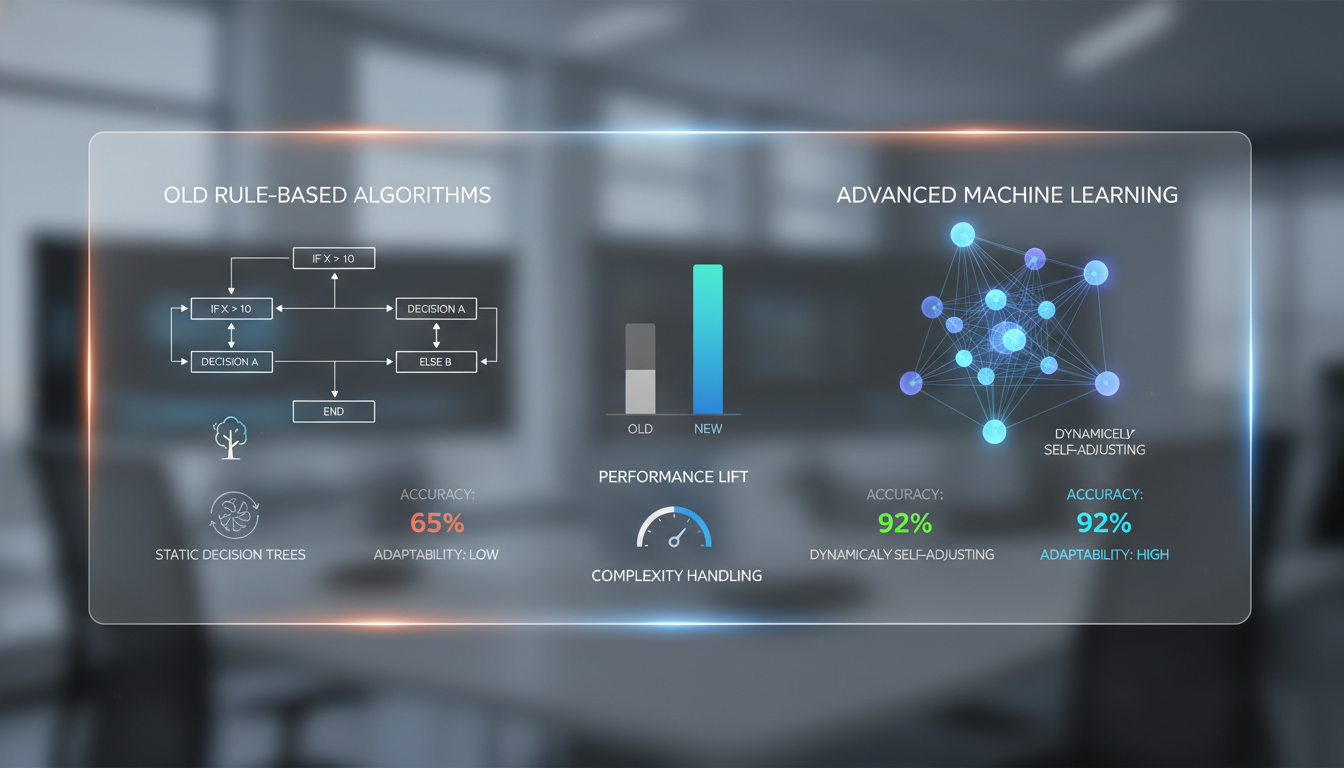
The Architectural Breakdown: Rule-Based PPC Software vs. Autonomous AI Advertising
To succeed in modern marketplace marketing, brands must understand why legacy advertising software is insufficient. Rule-based platforms rely entirely on human input. They require a user to set thresholds, monitor campaigns daily, and continuously update rules as market conditions change. If a seller forgets to modify their rules during high-traffic events like Prime Day or the Q4 holiday season, the system will execute outdated rules, either overspending on expensive keywords or shutting down profitable ads due to temporary spikes in click costs.
True marketing ai software operates under an entirely different architecture. Instead of following rigid pre-set pathways, next-generation ai advertising platform systems utilize complex machine learning models, reinforcement learning, and multi-agent networks. These systems look at hundreds of contextual variables simultaneously:
- Historical and predicted conversion rates (CVR) per search query.
- Intra-day conversion patterns (dayparting) and temporal shopping trends.
- Product profit margins, cost of goods sold (COGS), and inventory velocity.
- Cross-ASIN halo effects and organic keyword rankings.
- Competitor pricing shifts, active promotions, and deal status.
By analyzing these variables, an autonomous ai advertising platform continuously calculates the optimal bid price for every single ad placement, maximizing efficiency. Below is a comparative breakdown of legacy software versus next-generation autonomous AI systems:
| Feature/Capability | Legacy Rule-Based Software | Autonomous AI Platform (AdAstraa) |
|---|---|---|
| Bidding Strategy | Static "if-then" rules executed once per day. | Continuous 24/7 predictive micro-bidding. |
| Keyword Management | Manual list updates or basic match-type transitions. | Automatic semantic harvesting and negative matching. |
| Creative Asset Generation | None. Assets must be designed and uploaded manually. | AI-powered generation of lifestyle images and videos. |
| Inventory and COGS Integration | Blind to cost of goods sold and real-time inventory levels. | Inventory-aware campaigns that pause when stock is low. |
| Primary Optimization Focus | ACoS and top-line sales volume. | True Profit per ASIN and Total ACoS (TACoS). |
Dynamic Bid Optimization: How Autopilot Solves the CPC Inflation Problem
In an era of rising acquisition costs, the cornerstone of successful amazon ppc management is speed and precision. This is where amazon ppc ai and amazon ads automation show their true strength. Traditional manual management forces agencies to log in daily and make sweeping bid changes across thousands of keywords. This static method inevitably leads to wasted ad spend, as bids remain artificially high during low-conversion hours of the day (e.g., late night/early morning) and fail to capture impressions during peak shopping hours.
Autonomous systems solve this with continuous, real-time ppc automation. The machine learning engine calculates the conversion probability of each search query. If the algorithm detects that conversion rates for a specific keyword spike between 6:00 PM and 9:00 PM on weekdays, it dynamically raises the bid to capture high-intent traffic. Conversely, it will automatically shade the bid downwards when conversion probability drops, preventing costly non-converting clicks.
Furthermore, semantic harvesting algorithms eliminate the manual effort involved in running keyword reports. A high-performing amazon ppc tool dynamically monitors shopper search terms. When it discovers a high-converting search query, it automatically promotes it from broad or phrase matches to an exact-match campaign, while simultaneously adding wasteful, non-converting search terms to negative keyword lists across all active ad groups. This active, continuous optimization loop drastically reduces wasted ad spend, driving down the overall Advertising Cost of Sales (ACoS) while freeing up valuable human hours.
Generative Creatives and Customer Intent Intelligence
While bidding algorithms are essential for efficiency, creative assets have become the ultimate differentiator in modern amazon advertising campaigns. With the introduction of Sponsored Brands, Sponsored Display, and Sponsored Brands Video, high-quality creatives are no longer a luxury—they are the driver of click-through rate (CTR) and conversion.
According to Sequence Commerce's Amazon Advertising statistics report, Sponsored Brands Video ads show an average conversion rate of 11.2% (which is 13% higher than standard static image ads) and an average click-through rate of 0.89% (which is a massive 2.6 times higher than static ads). However, producing professional lifestyle photography and video variations for hundreds of SKUs is an expensive, slow bottleneck for most D2C brands and agencies.
Enter the next generation of creative ai advertising platform technology. An ai ad generator or ai powered ad creative engine can create hundreds of dynamic, high-converting image and video assets within minutes. By feeding product features, listings, and customer reviews into an ai ad creator, brands can generate highly targeted ad variations that resonate with specific customer segments.
To maximize the impact of these generative creatives, they must be combined with deep buyer intent signals. This is where Shopper OS buyer intent intelligence plays a crucial role. Instead of broad, generic targeting, the platform monitors buyer intent patterns (such as repeat product page views, cart abandonment, and brand-switching behaviors) to display the perfect creative variation at the precise moment a shopper is ready to make a purchase decision. This integration of creative generation and contextual targeting represents the modern state-of-the-art in marketing with ai.

Profit-First Advertising: Shifting Focus from ACoS to Net Profitability
For years, the gold standard metric for Amazon sellers has been ACoS. However, relying purely on ACoS is a dangerous strategy. A brand can easily achieve a low ACoS on paper while operating at a net loss if the product's underlying margins are thin, returns are high, or FBA storage fees are spiking.
To build a sustainable e-commerce business, brands must transition to a profit-first mindset. This requires an all in one advertising platform that tracks unit economics at the individual SKU level. A modern marketing management platform must pull data from both the Amazon Advertising API and the Seller Central SP-API to calculate the "True Profit per ASIN" in real-time. This means factoring in:
- Manufacturing costs (COGS) and inbound shipping fees.
- Amazon referral fees, FBA fulfillment costs, and storage fees.
- Product return rates and write-offs.
- Dynamic changes in organic keyword rankings.
This level of intelligence enables "inventory-aware PPC". If a highly profitable product is running low on stock, an intelligent amazon ppc automation tool will automatically decrease ad spend. This preserves inventory and prevents a stockout, which would otherwise devastate the product's organic ranking and search visibility. Conversely, when excess inventory is detected, the platform automatically scales bids to accelerate sell-through, avoiding costly long-term storage fees.
For ad agencies, this automated integration is a game-changer. Rather than wasting hours compiling spreadsheets and adjusting client budgets manually, account managers can use campaign management tools to oversee dozens of brands from a single interface. This ensures that every ad campaign is optimized for actual dollar profitability rather than vanity metrics.
A Phased Roadmap: Integrating Autonomous AI into Your Amazon Operations
Transitioning from manual PPC management or basic rule-based software to a fully autonomous AI system can feel daunting. To ensure a smooth, risk-free transition, brands should adopt a structured, four-phase implementation roadmap:
- The Historical Audit: Begin by gathering at least 60 to 90 days of historical campaign data. Calculate your baseline ACoS, TACoS, organic-to-advertising sales ratio, and conversion rates across your top-performing SKUs. Identify where budget leakage is highest (e.g., non-converting search terms).
- The Hybrid Pilot: Rather than moving your entire product catalog to Autopilot immediately, select a representative subset of high-volume and mid-tier SKUs. Connect them to an autonomous amazon ppc automation software and define strict budget limits and maximum CPC safety boundaries. Monitor the algorithm's decisions over a 14-day learning window.
- Full Autopilot & Semantic Harvesting: Once the initial learning phase proves successful, roll out the AI bidding and automated keyword harvesting across your entire catalog. Let the multi-agent system manage keyword match-type migrations, negative keyword harvesting, and dayparting curves.
- Omnichannel & Creative Expansion: Leverage generative ai ad creator engines to produce high-impact lifestyle and video ad assets. Feed these assets into your Sponsored Brand and Sponsored Display campaigns, utilizing buyer intent signals to serve the right creatives to the right audience segments.
Frequently Asked Questions
What is the difference between rule-based PPC automation and autonomous AI PPC software?
Rule-based software relies on static "if-then" rules created by humans. It is reactive and cannot adapt to real-time market changes, competitor bids, or stock fluctuations. True AI PPC software uses machine learning and multi-agent neural networks to analyze hundreds of data signals simultaneously, making proactive micro-adjustments 24/7 to maximize profitability.
How does AI advertising improve my True Profit per ASIN?
Unlike legacy tools that focus solely on vanity metrics like ACoS, an advanced platform like AdAstraa integrates unit economics (COGS, FBA fees, storage costs) and inventory levels. It dynamically lowers bids on low-stock items to prevent organic ranking loss and ramps up spend on high-margin, overstocked products.
Is AI ad creative generation effective on Amazon?
Yes. According to Amazon advertising trends and conversion data, high-quality creatives (especially video and custom lifestyle imagery) drive significantly higher CTR and conversion. AI ad creators automatically design professional assets customized to target search terms, saving brands thousands of dollars in creative production costs.
Can ad agencies benefit from Amazon PPC automation software?
Absolutely. Multi-brand agencies use AI-driven workflow automation to eliminate manual, repetitive bidding and harvesting tasks. This allows account managers to focus on high-level strategy, scale creative assets, and manage more client portfolios efficiently without increasing headcount.
What are the biggest benefits of a profit-first marketing approach?
A profit-first approach ensures you do not waste ad spend scaling sales that actually lose money due to high COGS, returns, or storage fees. By linking PPC bids directly to real-time unit margins, brands can guarantee that every dollar spent on advertising actively contributes to bottom-line profitability.
Embracing the Future of Amazon Ad Strategy
The future of Amazon advertising is undeniably autonomous. As CPC costs continue to rise and the competition for organic real estate intensifies, brands that rely on manual adjustments or rigid, rule-based software will struggle to maintain their profit margins. By adopting an advanced, multi-agent AI advertising platform like AdAstraa, brands can transition to a profit-first strategy—automating bids 24/7, continuously harvesting profitable keywords, generating high-conversion ad creatives, and scaling their businesses with absolute clarity. For further insights on how to transform your creative strategies, explore Amazon Ads' expert guide on AI marketing trends to stay ahead of the curve.