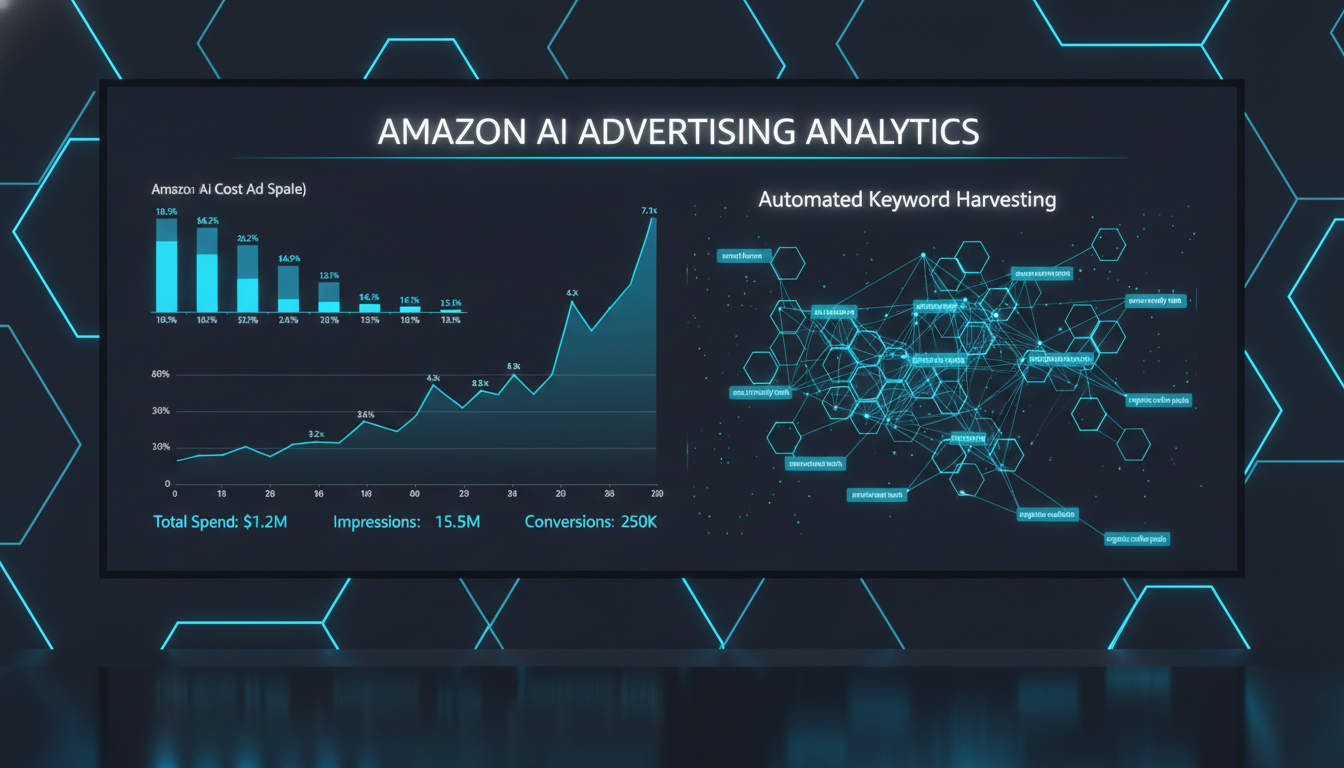
The Cognitive Shift in Amazon Advertising
The era of manual bulk sheet adjustments, guesswork bidding, and static keyword chasing is officially over. Today, Amazon is a hyper-competitive, real-time auction marketplace where millions of product listings vie for shopper attention. In this high-velocity landscape, legacy manual bidding methods and rigid "if-then" rules-based scripts are no longer sufficient to maintain market share. Instead, enterprise brands and high-growth e-commerce sellers are turning to next-generation ai advertising to navigate the complexities of modern digital marketplaces.
At its core, utilizing ai ads on Amazon involves shifting from reactive campaign management to predictive, multi-dimensional execution. While traditional manual amazon ppc management required hours of downloading spreadsheet data, analyzing conversion rates, and adjusting bids, modern ai and advertising systems handle these tasks in microseconds. The ultimate goal is simple: maximize share of voice, lower the Advertising Cost of Sales (ACoS), elevate Return on Ad Spend (ROAS), and achieve true capital efficiency across your entire product portfolio.
To succeed, brands must realize that artificial intelligence ads do not simply automate manual tasks; they fundamentally change how campaigns learn, adapt, and scale. By integrating advanced ai in ads, sellers can predict buyer behavior, dynamic bid elasticity, and optimal creative formats on the fly. This guide outlines the strategic blueprint for using marketing with ai to build a resilient, highly profitable, and scale-ready amazon advertising strategy that drives long-term brand equity.
The Core of AI and Marketing in the Amazon Ecosystem
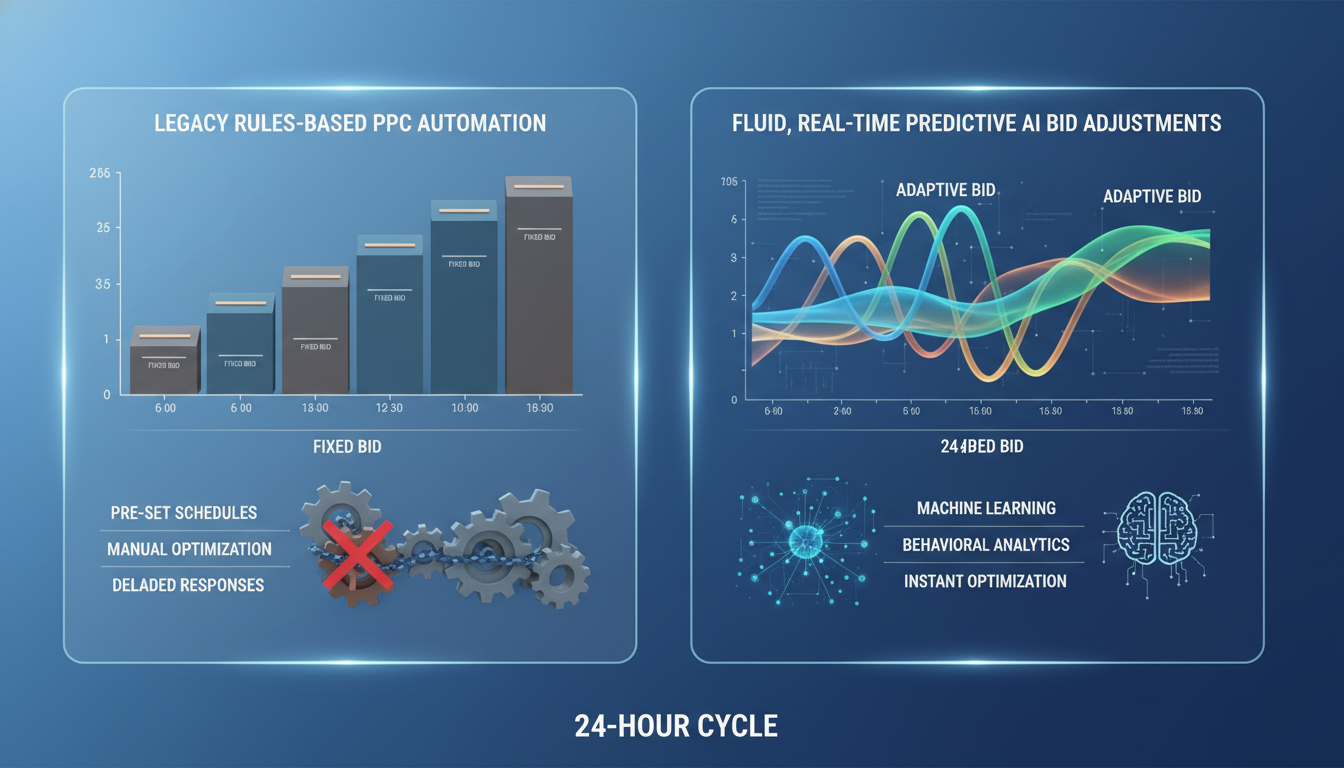
To fully grasp how modern software optimizes your campaigns, it is essential to explore the relationship between ai for marketing and the complex Amazon marketplace structure. Traditional automation tools, often branded as basic automation marketing tools, operate on static, hard-coded rules. For example, a legacy system might have a rule stating: "If a keyword's ACoS exceeds 35% over 14 days, lower the bid by 10%." While this rule-based approach stops immediate ad spend bleed, it is inherently reactive and lacks context.
In contrast, sophisticated marketing ai relies on predictive machine learning. Rather than waiting for a keyword to fail over a two-week period, a predictive algorithm evaluates dozens of real-time variables. These variables include historical conversion rates (CVR) by hour of the day, current stock levels, real-time competitor price changes, and organic search ranking trends. According to Amazon's official 2025 AI marketing research, these agentic and generative models are actively redefining how brands target, engage, and convert shoppers at scale.
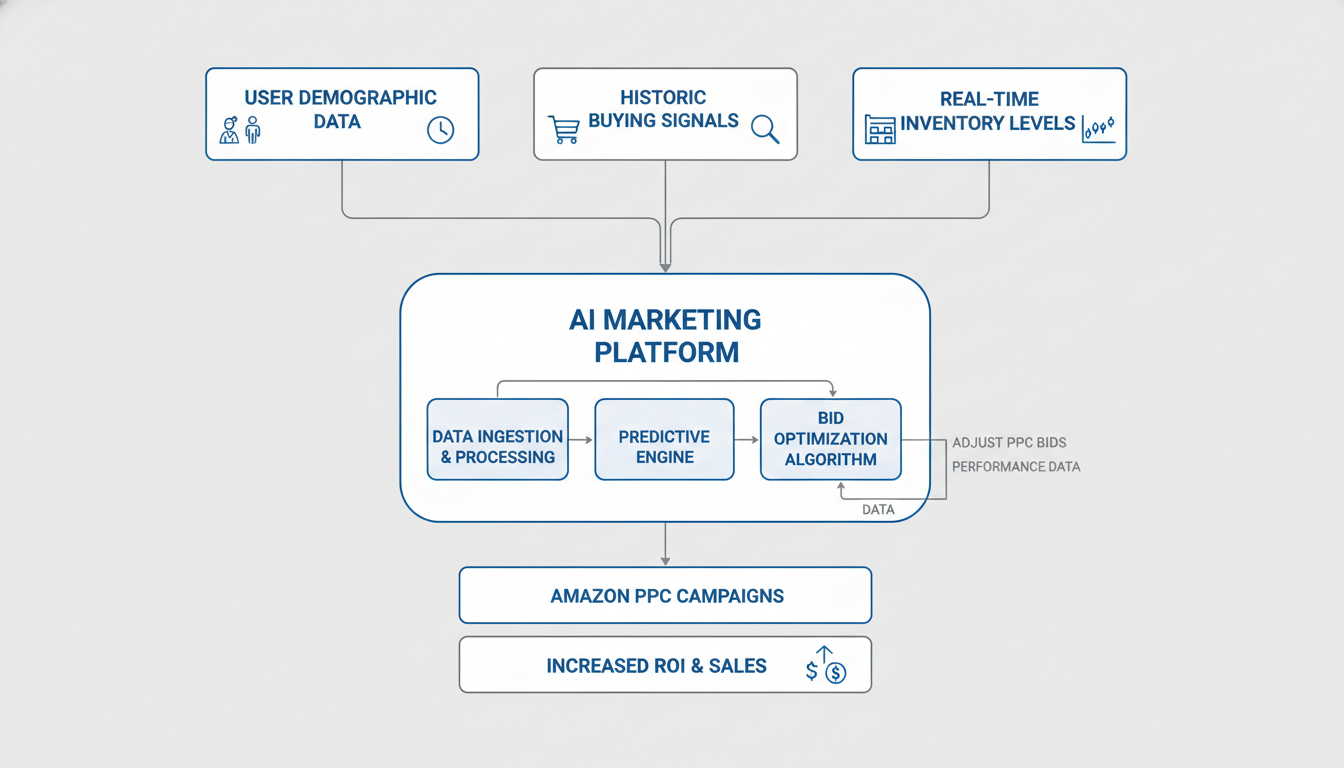
Furthermore, consumer search behaviors are evolving rapidly due to the proliferation of conversational interfaces. As highlighted in eMarketer's generative search spending report, generative search results are quickly becoming the new normal, shaking up ad spend allocation across major retail platforms. To stay ahead of these structural shifts, brands are adopting a unified ai advertising platform like the AI-driven ad optimization platform AdAstraa. By utilizing an integrated platform, sellers can leverage marketing automation using ai to align their advertising budgets with real-time customer intent and inventory realities, rather than relying on fragmented, manual spreadsheets.
When you shift to an ai software for marketing that offers true ai based marketing automation, your campaigns transition from isolated structures to a cohesive, self-optimizing ecosystem. Budget dynamically flows from low-converting terms to high-converting queries, and the software automatically adjusts your bids to match the real-time probability of a sale.
Demystifying Creative Generation: The Power of AI Ads Creator and Ad Generator Tools
While precise bidding is a foundational element of any successful amazon advertising campaign, the visual assets you present to shoppers are what ultimately drive clicks and conversions. Historically, creative asset generation for Sponsored Brands, Sponsored Display, and Amazon DSP campaigns has been a massive operational bottleneck. Marketing teams had to draft creative briefs, coordinate with expensive graphic design agencies, and wait weeks for a handful of lifestyle images or video variations.
This bottle-neck is resolved through the deployment of the ai ad generator, ai advertisement generator, and modern ad creator ai. By integrating an advanced ai ad creator or ai ads creator directly into your advertising workflow, your design cycles are compressed from weeks to seconds. You can upload a simple, clean product photo and immediately generate photorealistic, brand-aligned lifestyle scenes that capture consumer attention.
Let's look at how modern e-commerce brands generate ads with ai. Through the AdCreative+ creative suite, brands can instantly construct hundreds of high-impact ad variations. These variations are designed to target specific buyer personas. For instance, a coffee maker brand can automatically generate visual variations highlighting a cozy home kitchen, a modern office space, or a sleek minimalist studio apartment. This capability makes launching and testing ai powered ad creative incredibly fast and affordable.
The primary advantage of running ads with ai is the elimination of creative fatigue. In digital advertising, even the highest-converting visual eventually suffers from diminishing returns as the target audience sees it repeatedly. To prevent this, an integrated ai ads generator continuously produces fresh variations. Furthermore, by pairing these creative tools with Amazon Ads Generative AI solutions, sellers can easily turn static product images into 6-15 second professional video ads. This allows brands to effortlessly launch Sponsored Brands Video ads that stand out in search engine result pages (SERPs).
The Blueprint for Amazon PPC Automation and Bid Management
Many brands start their digital commerce journey by taking an introductory amazon ppc course or executing manual bids inside the Amazon Seller Central console. While this is sufficient for a launch phase with one or two products, managing a growing catalog with dozens or hundreds of ASINs requires robust, enterprise-grade amazon ppc advertising technology. To scale profitably without letting manual tasks consume your team's hours, you must leverage predictive amazon ppc automation.
Below is the architectural blueprint for setting up an elite, automated bidding and keyword harvesting structure powered by amazon ppc ai:
1. Dynamic Keyword Harvesting and Migration
A structured account separates campaigns into three functional layers: Discovery (broad/auto match), Refinement (phrase match), and Scaling (exact match). A top-tier amazon ppc automation software or amazon ppc automation tool continuously scans search term reports. The moment a query in a broad match campaign converts three times within a specified timeframe, the ppc automation engine automatically:
- Creates the keyword as an exact-match target in the Scaling campaign.
- Applies the keyword as a negative exact match in the broad/auto campaign to prevent internal bidding wars and budget cannibalization.
2. Predictive, Intra-Day Bid Optimization
Standard ppc software tools adjust bids once a day, usually looking at historical conversion data over a 14-day or 30-day window. However, click-through rates and conversion rates vary wildly throughout the day. A high-performance amazon ads automation system uses machine learning to perform dayparting and bid elasticity adjustments. It analyzes immediate traffic patterns and historical performance by the hour to calculate the exact bid needed to win the placement at the lowest possible cost, preventing overspending during low-converting hours.
3. Automated Negative Keyword Harvesting
The fastest way to reduce ACoS is to eliminate non-converting clicks. An intelligent amazon ppc software or ppc software for amazon continuously monitors search term performance. If a search query reaches a pre-determined threshold—for example, 10 clicks with zero purchases—the amazon ppc tool automatically adds it as a negative keyword across all associated campaigns, instantly preserving ad spend.
4. Fluid Cross-Campaign Budget Allocation
One of the biggest issues in manual amazon advertising management is campaign budget depletion. A high-performing campaign might run out of budget by 2:00 PM, causing the brand to miss out on valuable peak evening traffic. Using a comprehensive marketing management platform or ad management platform allows for fluid budget reallocation. If Campaign A is converting exceptionally well while Campaign B is underperforming, the platform's ad campaign automation system dynamically shifts unused budget from Campaign B to Campaign A in real-time.
Sellers searching for terms like advertising software free or free ad software will quickly find that basic freeware lacks the necessary predictive capabilities, multi-campaign architecture, and API-level retail integrations needed to execute this blueprint. Scaling a high-growth brand requires an enterprise-level ad management software or advertising management platform that functions as a centralized command center. This type of all in one advertising platform ensures your marketing efforts are directly aligned with your business's bottom-line margins.
Beyond the Bid: Shopper Intent and Continuous Optimization
Achieving elite amazon ppc optimization is not just about adjusting bids and managing keywords. It requires aligning your advertising efforts with deep retail intelligence and operational reality. Many brands employ legacy amazon ppc advertising services that operate in an operational vacuum. They optimize campaigns without visibility into key factors like stock levels, COGS, shipping rates, or organic keyword rankings. This lack of integration often leads to major inefficiencies, such as driving high ad volumes to an ASIN that is nearly out of stock.
When an ASIN runs out of stock, Amazon's organic ranking algorithm penalizes the listing, erasing weeks or months of organic growth. A sophisticated amazon ads software or amazon advertising software avoids this by monitoring FBA inventory levels in real-time. If stock drops below a specific day-of-supply threshold, the ppc optimization software automatically dials back bidding aggression on high-velocity keywords, shifting budget to high-margin, long-tail terms to slow down sales while keeping the listing active.
Furthermore, understanding buyer behavior off-platform is essential to maintaining a competitive edge. By leveraging the Shopper OS buyer intent engine, brands can harness deep shopper intent intelligence. This marketing analytics ai analyzes category search volume, search velocity, and off-platform interest, allowing your ai ppc management system to predict search demand spikes before they peak on Amazon. This integration of ai ppc and ppc ai allows you to bid on rising keywords at a much lower cost-per-click (CPC) before competitors realize the trend exists.
This is why high-growth brands are moving away from standard ppc campaign management software and adopting comprehensive marketing optimization tools. These advanced ai advertising tools connect your advertising performance to your actual unit economics, providing real-time visibility into True Profit per ASIN. It ensures that every single dollar spent on automated ads or ppc automation tools directly contributes to healthy organic ranking, profitable inventory turnover, and sustainable growth.
Comparative Analysis: Legacy Tools vs. Next-Gen AI Platforms
When selecting the best amazon ppc software or evaluating amazon ppc management tools for your portfolio, it is important to understand how next-generation AI platforms compare to legacy rule-based software. Below is a structured comparison outlining the differences in bidding, creative management, inventory integration, and profit tracking:
| Feature / Metric | Legacy PPC Software Tools | Next-Gen AI Advertising Platforms (AdAstraa) |
|---|---|---|
| Bidding Methodology | Rule-based "if-then" scripts; hourly or daily latency. | Predictive machine learning; real-time intra-day bid adjustments. |
| Creative Asset Production | Manual uploads; static assets; no automated testing. | Integrated AI ad generator and high-velocity asset testing. |
| Inventory Integration | None; bids aggressively regardless of stock levels. | Real-time stock level synchronization and automated bid dampening. |
| Buyer Intent Intelligence | Basic historic keyword conversion tracking. | Advanced shopper intent mapping, search velocity tracking, and off-Amazon signals. |
| Profit Tracking | Ad spend and ACoS only; lacks COGS or true profit visibility. | Comprehensive True Profit per ASIN analysis, including shipping, COGS, and FBA fees. |
To implement the best amazon marketing campaigns, brands must choose platforms that provide end-to-end operational visibility. Legacy tools that operate on static criteria will struggle to perform in a dynamic marketplace. Choosing the best amazon ppc automation software or the best amazon ppc automation tool ensures your brand is supported by predictive algorithms that adapt to changing market conditions and focus on long-term brand equity.
Conclusion & Strategic Next Steps for Brands
Transitioning from manual, reactive campaigns to predictive, AI-driven marketing is the single most impactful move an Amazon brand can make. By pairing dynamic, real-time bid adjustments with high-velocity creative testing and deep buyer intent intelligence, you can reduce wasted ad spend, protect your organic listings, and drive sustainable growth across your product catalog.
Sellers should no longer accept bloated ACoS and manual overhead. Take control of your marketplace growth today. Partner with an experienced ai advertising company like AdAstraa to deploy advanced amazon ppc services, utilize state-of-the-art marketing workflow automation, and unlock true marketplace dominance. Learn how AdAstraa can transform your e-commerce growth by scheduling a demo today.