
The Paradigm Shift: Why AI Advertising is No Longer Optional for Amazon Brands
The landscape of Amazon e-commerce has grown increasingly sophisticated. Brands can no longer rely on simple, static bid adjustments or manual keyword harvesting to remain profitable. As rising acquisition costs put pressure on operating margins, utilizing advanced ai advertising technologies has shifted from a competitive advantage to an absolute necessity. Modern sellers must leverage ai ads to navigate a hyper-competitive space where every click impacts the bottom line.
According to recent Triple Whale's retail benchmark data, ecommerce brands are seeing shifting dynamics in acquisition costs, with return on ad spend (ROAS) climbing to averages around 3.14 to 3.35 across various retail categories. This performance range highlights the immense potential of highly targeted ads, but it also signals that even on high-intent platforms, capturing the right audience requires significant, precise investment. For brands looking to optimize every aspect of their marketplace presence, an all in one advertising platform like AdAstraa helps stop wasting ad spend, lowers Advertising Cost of Sales (ACoS), and boosts ROAS with real-time operational precision.
The combination of ai and advertising has fundamentally redefined the seller's workflow. Instead of spending hours calculating bid adjustments in spreadsheets, automated machine learning models process millions of data points every second. This enables 24/7 campaign optimization that responds dynamically to shopper search behavior, competitor stockouts, and regional demand shifts. In this comprehensive guide, we will explore the depths of artificial intelligence ads, analyze the transition from manual management to ad automation, and showcase how high-growth brands use ai in ads to scale effortlessly.
Decoding AI in Ads: Core Concepts and Technologies
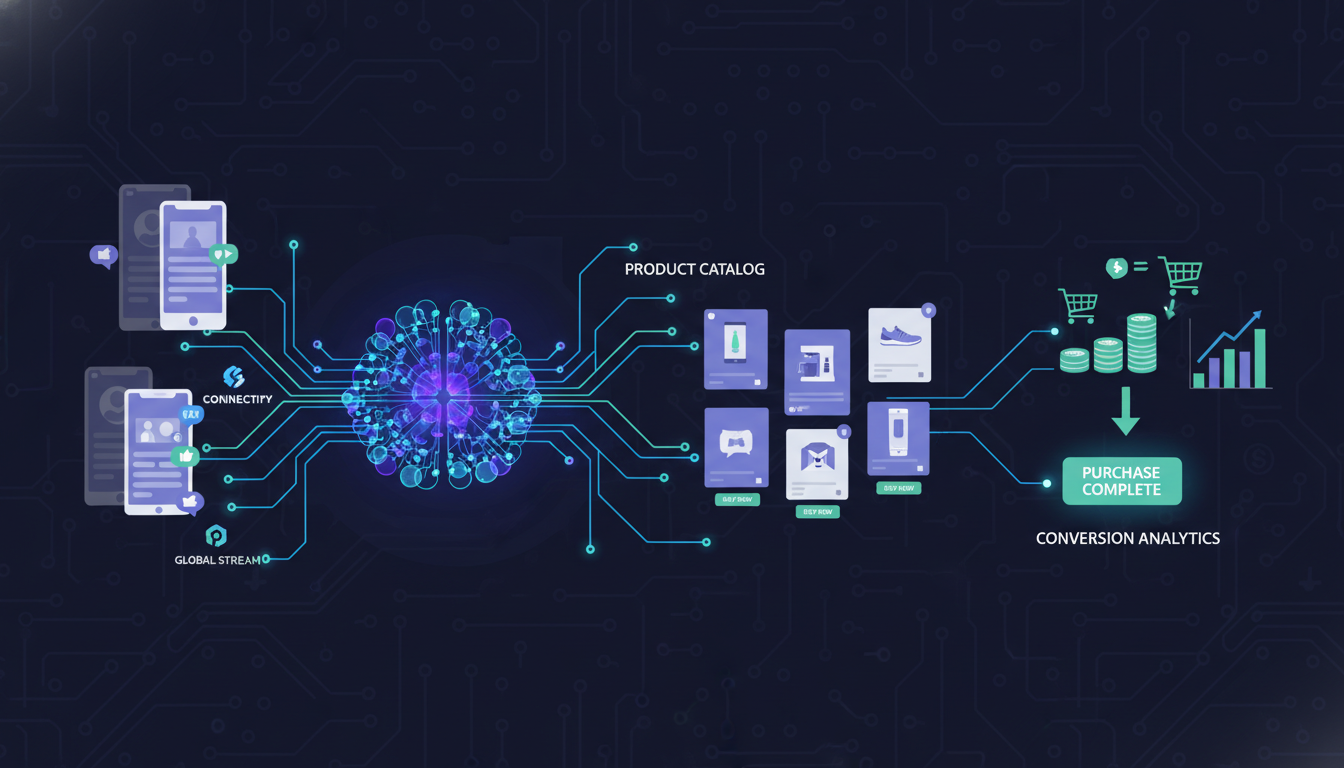
To fully grasp the power of modern ad tech, it is essential to distinguish basic automation from advanced ai for marketing. While legacy automation marketing tools rely on basic "if-this-then-that" rules, true marketing automation using ai employs neural networks and predictive analytics to make autonomous decisions.
AI Ads Generators and Creative Optimization
One of the fastest-growing sectors within ad tech is the development of the ai ad creator. Traditional creative production is slow, expensive, and difficult to scale across thousands of product variations. With an ai ad generator or ai advertisement generator, brands can instantly construct dozens of high-converting visual assets and copy variations tailored to specific buyer personas. An ai ads creator doesn't just design attractive banners; it analyzes past performance trends to understand which color schemes, layouts, and call-to-actions generate the highest CTR. By deploying an ai ads generator, sellers can easily build ai powered ad creative options that adapt to various audiences, lowering production friction and maximizing conversions.
Real-Time Intent Intelligence
True marketing ai goes beyond creative generation to analyze what occurs before a click even happens. By combining ai and marketing data streams, modern software tracks user journey touchpoints to predict purchase intent. For instance, AdAstraa’s Shopper OS delivers buyer intent intelligence, identifying when a customer is ready to buy versus when they are just browsing. This degree of intelligence ensures that your budget is allocated to high-converting traffic, making marketing with ai a highly cost-efficient approach to building long-term brand equity.
A study on marketing automation studies on data quality shows that over 74% of marketers believe AI is critically important for their growth, yet data quality remains the biggest obstacle to unlocking its true ROAS potential. Without clean data and structured machine learning pipelines, automation simply accelerates bad spending. High-performing brands are therefore migrating away from basic tools and adopting integrated ai tools for advertising that unify both intent data and creative automation.
The High Cost of Manual Amazon PPC Campaign Management
Many sellers begin their journey by taking an amazon ppc course and managing campaigns manually inside the Amazon Advertising Console. While this approach is acceptable for brands with only one or two products, it quickly becomes unsustainable as your catalog grows. Managing an amazon ppc advertising campaign manually presents several critical challenges:
- The 24/7 Bidding Dilemma: Amazon shoppers buy products around the clock. Manual bids are static, meaning you pay the same rate at 3:00 AM (when conversion rates are low) as you do at 7:00 PM (when high-intent buyers are active).
- Keyword Bleeding: Without constant supervision, non-converting keywords can quickly consume your daily budget. Manually checking search term reports once a week is too slow to stop this bleeding.
- Inability to Scale: Managing multi-channel campaigns, sponsored brands, and product targeting (ASIN) ads for dozens of Parent and Child ASINs requires hundreds of manual operations daily, leading to human error and missed opportunities.
To overcome these bottlenecks, many sellers look for basic software solutions. However, searching for advertising software free or utilizing free ad software often leads to limited rule-based scripts that fail to adapt to seasonal fluctuations or sudden changes in competitor behavior. True success in amazon advertising management requires an enterprise-level amazon advertising strategy powered by dedicated machine learning systems. By utilizing advanced amazon advertising services alongside robust ppc software, brands can offload tedious tasks and focus on product development and creative positioning.
The Pillars of AI Advertising Platform & Ad Automation
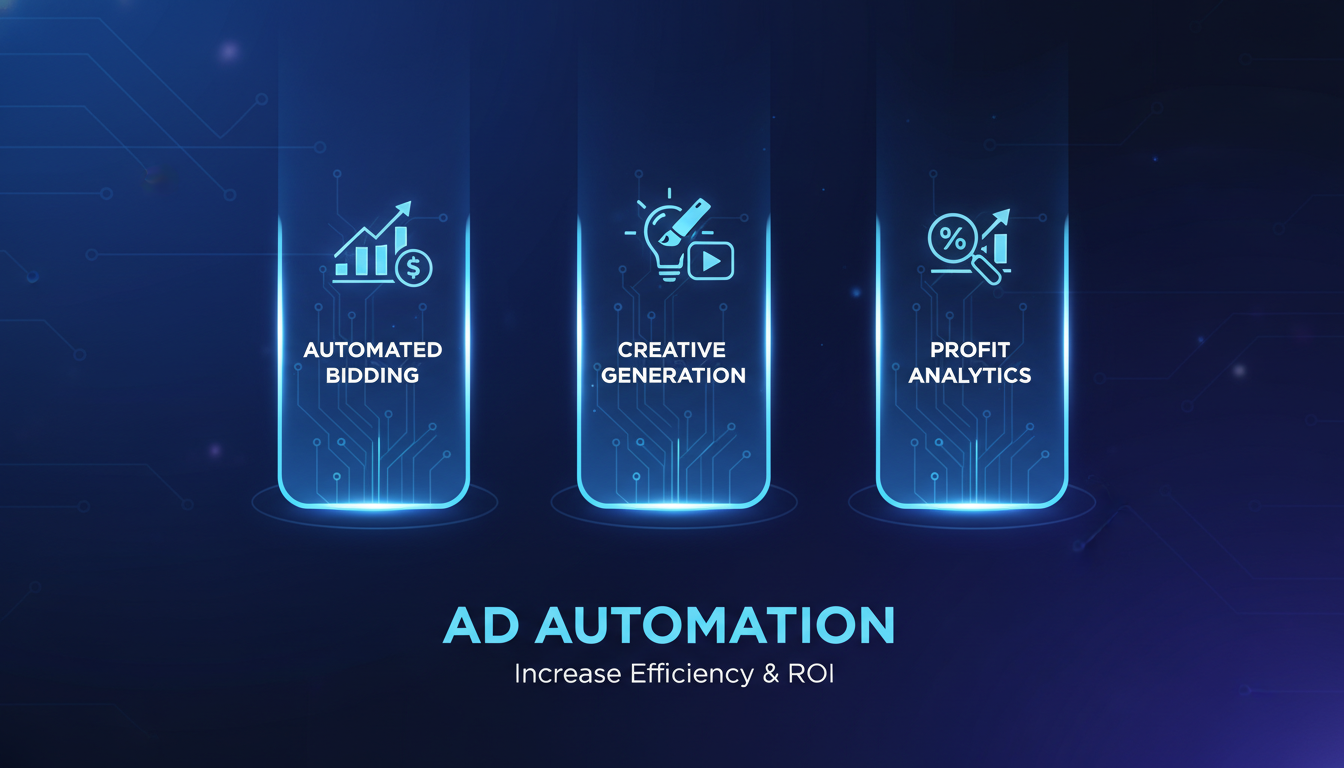
An effective ai advertising platform relies on three core pillars to transform your amazon advertising campaign from a cash-burning machine into a highly efficient engine of growth.
Pillar 1: Autopilot Bid Optimization
The foundation of amazon ads automation is predictive bidding. Unlike legacy rule-based systems that change bids by a set percentage when certain thresholds are met, a true amazon ppc ai platform analyzes historical performance, conversion likelihood, real-time search trends, and stock levels to calculate the optimal bid for every single keyword auction. By trusting an amazon ppc automation tool, you can automate amazon advertising workflows seamlessly. This dynamic adjustment process reduces wasted spend on low-converting queries while aggressively raising bids on high-converting keywords to capture top-of-search placements.
Pillar 2: Creative & Messaging Automation
Generating high-performing creative assets is traditionally the most time-consuming part of launching new campaigns. By using an ad creator ai, brands can automatically test hundreds of different headlines, product placements, and background graphics. Deploying an ai ad creator allows you to rapidly refresh creative assets to avoid ad fatigue. Implementing advanced ai advertising strategies is essential for converting high-intent traffic, helping you present the exact visual and messaging combination that aligns with a shopper's micro-intent.
Pillar 3: Data-Driven Analytics and Workflow Automation
Modern e-commerce requires structured, real-time insights. An advanced marketing analytics ai consolidates metrics from multiple sources—including PPC spend, organic rankings, COGS, and return rates—to provide a clear picture of True Profit per ASIN. By utilizing a marketing management platform integrated with marketing workflow automation, operations that previously took hours are completed in milliseconds. This level of ai based marketing automation ensures that your ad spend always supports your ultimate business goal: maximum profitability.
Evaluating the Market: Best Amazon PPC Software & Management Tools
When searching for the best amazon ppc software or best amazon ppc automation software, it's easy to get lost in a sea of overlapping features. To help you select the ideal amazon ppc tool or amazon ppc software, we have created a comprehensive comparison of different ad management platforms.
| Capability / Feature | Manual Ad Management | Legacy Rule-Based PPC Software | AI-Powered Ad OS (e.g., AdAstraa) |
|---|---|---|---|
| Bid Adjustments | Manual calculations; slow and retrospective. | Static rule parameters (e.g., "If ACoS > 30%, lower bid"). | Predictive machine learning algorithms that adjust bids hourly based on conversion probability. |
| Creative Production | Manual design, copywriting, and constant uploads. | No built-in creative features; relies on third parties. | Automated creative generation and instant asset testing. |
| Data Unification | Disjointed spreadsheets and CSV files. | Basic API syncing; focus is only on PPC metrics. | Complete operational integration, linking PPC, inventory, COGS, and organic growth. |
| Actionability | Highly reactive; delayed insights lead to wasted budget. | Relies on human operators to set rules and monitor parameters. | Proactive autopilot modes that execute continuous optimizations silently. |
Sellers choosing a ppc software for amazon must recognize that legacy tools are often just basic dashboards that display data without driving action. Choosing a true amazon ppc automation software or amazon ppc automation tool empowers your team to shift from active maintenance to strategic growth. This transition from basic campaign management tools to an integrated ad management platform or advertising management platform is what differentiates fast-scaling Amazon brands from those struggling to stay profitable.
Building an Unbeatable Amazon Advertising Strategy with AI
To run the best amazon marketing campaigns, you must blend strategic human insight with automated machine learning execution. Below is a step-by-step roadmap for implementing an AI-driven approach to your amazon advertising platform operations.
1. Define Clear ROAS and ACoS Guardrails
Before launching any amazon campaign optimization tool, establish your clear financial thresholds. True profit calculation must include product manufacturing costs, shipping, Amazon referral fees, and FBA storage fees. Once your margins are clear, you can program these targets directly into your ppc optimization software or ppc software tools. The AI will then optimize keyword bids, targeting, and budgets to hit these specific profitability goals.
2. Eradicate Keyword Bleeding with Real-Time Negative Targeting
According to the average conversion rate benchmarks compiled by Ad Badger, the average conversion rate on Amazon PPC hovers around 11.55%, making click quality and landing page relevance crucial when scaling campaigns. This means that nearly 90% of clicks do not convert. If an expensive search term receives 15 or 20 clicks with zero conversions, it can quickly drain your budget. AI-powered ad management software identifies these low-performing keywords in real time, automatically adding them as negative targets to eliminate waste instantly.
3. Leverage AI-Powered Creatives for Sponsored Brands and Display
Sponsored Brands and Sponsored Display ads are highly prominent placements on Amazon. However, they require compelling visual elements. By utilizing an ai advertising company that supports ai based advertising, you can quickly build and test lifestyle images and custom headlines. This lets you determine what messaging resonates most with your target audience without spending thousands on professional photoshoots.
4. Maximize Organic Growth with Smart PPC Spillovers
The relationship between PPC sales and organic rankings is highly symbiotic. When your amazon ppc services or amazon ppc optimization tool drives high-converting traffic to a specific listing, Amazon’s search algorithm rewards that listing with improved organic positioning. By aligning your amazon advertising software with your organic SEO strategy, you can bid aggressively on high-intent search terms to drive rapid organic ranking improvements, lowering your overall blended ACoS over time.
The Future of AdTech: Scaling Beyond Amazon with AI
While mastering Amazon PPC is critical, the future of e-commerce lies in multi-channel orchestration. Leading brands are extending their reach by integrating ai for marketing campaigns across platforms like Google, Meta, and TikTok. Utilizing a unified ai advertising platform allows you to track customer journeys seamlessly across channels, allocating budget to the touchpoints that generate the highest overall yield.
Modern marketing ai software enables seamless cross-channel attribution, ensuring that your social media campaigns support your Amazon marketplace sales. By adopting ai ppc management and comprehensive ad campaign automation, brands can eliminate operational silos. Combining these capabilities with advanced ai based marketing automation creates an efficient growth loop that operates with minimal manual intervention.
"The brands that dominate e-commerce in the coming years will not be those with the largest budgets, but those that can synthesize data, creative, and bidding decisions the fastest. AI is the only tool capable of handling that complexity at scale."
If you are ready to stop wasting budget, save manual work hours, and discover your True Profit per ASIN, it is time to upgrade your ad tech. Explore how AdAstraa’s suite of intelligent tools can transform your business. From 24/7 Autopilot bidding to Shopper OS buyer intent intelligence, AdAstraa is the ultimate operating system for Amazon-first brands. Get started today and experience the power of next-generation ad optimization.