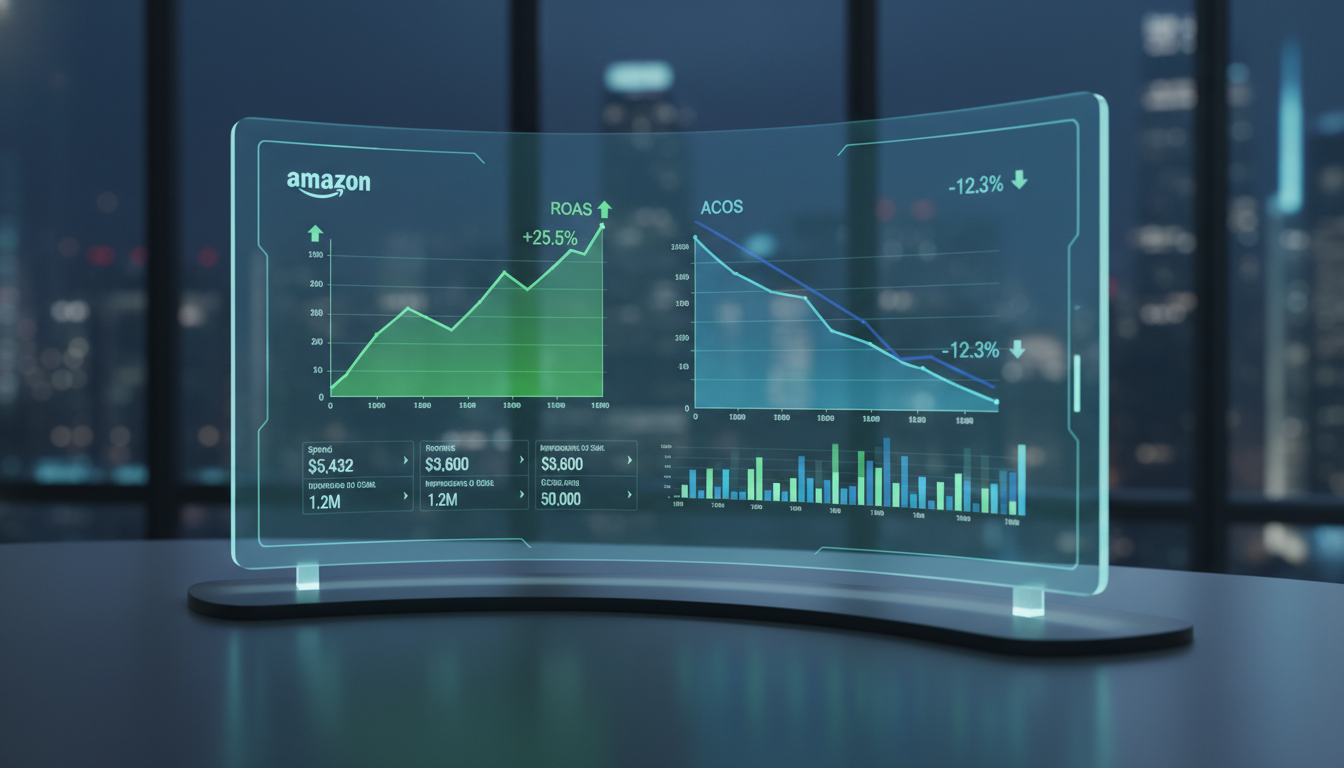
The Shifting Paradigm of Amazon PPC Management
The Amazon marketplace has evolved from a friendly sandbox for direct-to-consumer (D2C) brands into one of the most fiercely competitive digital auction houses in the world. With millions of active sellers and an incredibly sophisticated, fast-paced ad auction landscape, managing amazon pay per click ads manually is no longer a viable growth model. Brands that rely on legacy methodologies—manually updating bids once a week, guessing keyword match types, and running static campaigns—are rapidly losing market share to agile, algorithmic competitors who utilize ai advertising to automate and optimize their advertising footprint.
To win on Amazon today, FMCG brands, agencies, and enterprise sellers must transition to high-performance ai ads and automated optimization architectures. Using artificial intelligence ads and ai in ads is no longer a luxury reserved for the top 1% of brands; it is the fundamental baseline for maintaining profit margins, boosting return on ad spend (ROAS), and driving organic rankings. By executing campaigns through an advanced ai advertising platform, brands can eliminate wasted spend, capture high-intent buyers, and scale their operations without scaling manual overhead.

For brands and agencies looking to optimize their workflow, understanding the spectrum of available ppc software and ad automation systems is critical. Below is a comparative breakdown of how manual management, rule-based automation, and true artificial intelligence stack up against one another in modern Amazon marketing operations.
| Operational Dimension | Manual Campaign Management | Rules-Based Automation | AI-Powered Automation |
|---|---|---|---|
| Adjustment Frequency | Infrequent (Weekly or Daily at best) | Scheduled (Daily or hourly based on strict triggers) | Continuous 24/7 (Real-time dynamic adjustments) |
| Decision Inputs | Single metrics (e.g., historical ACoS) | Static "If-Then" logic (e.g., If ACoS > X, then lower bid) | Multi-variable (ACoS, conversion probability, seasonality, inventory, competitor pricing) |
| Keyword Management | Manual harvesting from search term reports | Basic search term harvesting rules | Semantic intent harvesting and instant negative matching |
| Scalability | Extremely low (Requires linear addition of headcount) | Moderate (Requires constant rule configuration and debugging) | Virtually infinite (Runs autonomously across thousands of ASINs) |
| Profit Integration | Disconnected from cost of goods sold (COGS) | Rarely factors in real-time inventory and margin structures | Deeply aligned with True Profit per ASIN and stock health |
Understanding Amazon PPC Automation: AI vs. Rules-Based Systems
Many legacy platforms marketed as "AI software" are actually glorified rules-based engines. A rules-based amazon ppc tool relies on static, rigid commands established by a human user. For instance, a user might write a rule stating that if a specific keyword exceeds a 35% Advertising Cost of Sales (ACoS), the software must reduce the bid by 15%. While this provides a basic form of ad campaign automation, it fails to adapt to the fluid dynamics of the Amazon auction landscape.
During periods of extreme traffic volatility, such as Prime Day, Black Friday, or seasonal peak periods, rules-based campaign management tools often break down. If traffic spike-driven conversion rates double, a rules-based system might still depress bids because of a brief, historical lag in conversion data. Conversely, true ai ppc management uses predictive modeling to forecast conversion probability in real-time. According to Perpetua's breakdown of AI versus rules-based PPC automation, systems relying strictly on rigid parameters often strip away the advertiser's competitive edge in high-stakes environments, whereas machine learning structures allow for dynamic adaptation.
A true machine learning model—utilizing ppc ai and deep learning algorithms—does not just look at a single metric like ACoS. Instead, it processes an array of data streams simultaneously: historical click-through rates (CTR) by hour of the day, seasonal purchase trends, inventory velocity, FBA fee changes, competitor pricing drops, and organic ranking shifts. This is the difference between simple "if-then" commands and genuine marketing analytics ai. By looking at the complete mathematical picture, an amazon ppc automation tool can safely determine when to bid aggressively to secure a top-of-search placement and when to pull back to preserve the brand’s margin.
Key Components of an Elite AI Advertising Platform
To successfully transition your brand to automated ad operations, you must understand the foundational pillars of elite ai advertising tools. It is not enough to simply automate bids; you must integrate every facet of your digital shelf—from product inventory to creative assets—into your marketing automation using ai.
1. Predictive Bid Optimization (Autopilot Bidding)
The core of any high-performing ppc software tools is predictive bid optimization. AI models utilize multi-variable regression and neural networks to calculate the precise revenue-per-click valuation for every keyword in your catalog. If a keyword has a high historical conversion rate at 2:00 PM on Tuesdays but drops off significantly at 9:00 PM, the system dynamically implements "dayparting" adjustments. This ensures your amazon advertising campaign is always bidding the optimal amount to secure a conversion, minimizing wasted spend on non-converting clicks.
2. Semantic Keyword Harvesting and Negative Match Automation
One of the most tedious tasks in amazon ppc management is manually combing through search term reports to identify profitable customer search queries and negative match terms. An advanced amazon ppc automation software automatically performs this harvesting loop. It parses millions of search terms using natural language processing (NLP), isolates semantic trends, and immediately promotes high-converting queries to exact match campaigns. Simultaneously, it maps low-performing search terms and flags them as negative matches, putting a stop to budget leakages instantly.
3. AI-Powered Ad Creative and Copy Generation
As Amazon’s ad formats skew heavily toward visual media, Sponsored Brands, Sponsored Video, and Sponsored Display have become vital channels. However, traditional creative production is slow and expensive. With an ai ad creator or an ai advertisement generator, brands can rapidly design hundreds of custom-tailored product images and optimized headlines. By leveraging platforms like AdCreative+, sellers can generate click-worthy, high-converting visual assets in minutes, lowering production costs while accelerating the speed of asset deployment across their active amazon ads campaign portfolios.

4. Total Profit Visibility and Catalog Integration
High sales volume means nothing if your profit margin is eroded by spiraling PPC costs. Elite ad management software does not optimize in a vacuum; it syncs directly with your product margins and operational systems. By cross-referencing advertising spend against manufacturing costs, shipping fees, and FBA storage rates, advanced platforms give brands real-time visibility into True Profit per ASIN. By using strategic tools like Shopper OS, brands gain complete visibility into buyer intent intelligence and dynamic margin health, ensuring that automated bid adjustments always align with the overarching goal of generating true, bottom-line profitability.
Strategic Framework: Designing an Amazon Advertising Strategy with AI
Simply purchasing an amazon ppc software license and turning it on is not enough. To unlock the full potential of marketing with ai, brands must follow a structured, strategic operational framework.
Step 1: Inventory-Aware Campaign Structuring
An algorithm can only optimize based on the data and pathways you provide. To set your amazon ppc ai up for success, group your campaigns by ASIN margins and inventory velocity. Never bundle a high-margin, slow-moving premium product in the same ad group as a high-velocity, low-margin entry-level item. Segmenting your catalog allows the ppc optimization software to allocate ad spend intelligently, driving aggressive growth on products with deep margins and defending organic positions on your core volume drivers.
Step 2: Establish the Automatic-to-Exact Keyword Funnel
Build a continuous optimization loop where Auto, Broad, and Phrase match campaigns act as search term "explorers," while Exact match campaigns act as "exploiters." According to IG PPC's operational framework for Amazon ad campaigns, an organized funnel is critical for ensuring that automation tools have clean historical pathways to scale search queries safely. The amazon ppc automation system should autonomously harvest converted keywords from your automatic and broad campaigns, move them into exact match ad groups, and simultaneously apply negative matches to the parent campaigns to prevent keyword cannibalization.
Step 3: Define Clear Strategic Goals (ACoS vs. TACoS)
AI needs clear target metrics. Are you launching a new product and trying to gain organic rank, or are you defending an established listing and trying to maximize profitability? For product launches, set a higher target ACoS or focus on Total Advertising Cost of Sales (TACoS) goals. The best amazon ppc automation software will allow you to assign specific strategies to individual campaigns—such as "Max Growth," "Sustained Efficiency," or "Inventory Liquidation"—and adjust the automated bidding curves accordingly.
Step 4: Integrate Off-Amazon Traffic Streams
Modern Amazon success is highly dependent on driving external traffic, as Amazon rewards listings that bring in new customers with significant organic ranking boosts. An all-inclusive marketing management platform will help sync your Amazon DSP, Google Ads, and social media campaigns with your on-platform PPC. This holistic, ai based marketing automation approach ensures that your cross-channel campaigns are highly coordinated, optimizing your total brand equity and overall marketing ROI.
How to Choose the Best Amazon PPC Software for Your Brand
With dozens of platforms claiming to be the best amazon ppc automation tool, separating marketing hype from actual technological capability is challenging. When evaluating amazon ppc management tools and broader ai software for marketing, you should audit each provider against five key criteria:
- Granularity of Bidding Engine: Does the software only adjust bids once a day, or does it dynamically adjust bids hundreds of times per day based on intraday patterns? True ai ppc requires real-time flexibility.
- Semantic Optimization Capabilities: Can the tool distinguish between close spelling variations, synonyms, and distinct keyword intents, or does it require you to build long, manual matching lists?
- Catalog-Wide Profit Tracking: Does the advertising management platform integrate with your actual product COGS and inventory data, or does it only report on vanity metrics like clicks and ad-attributed revenue?
- Creative Generation Capabilities: Does the software include built-in AI tools for asset creation, or will you need to source and integrate a separate ad creator ai tool?
- Transparent Pricing Structure: Beware of tools that charge a flat percentage of your total ad spend without any performance-linked guardrails. According to industry evaluations of profit-maximizing PPC tools, flat percentage fees can misalign incentives, encouraging platforms to scale your spend rather than your actual net profitability. Performance-based or fixed tier-pricing setups generally offer much stronger operational alignment.
The Future of Marketing with AI: Creative Automation and Buyer Intent
As the Amazon advertising platform matures, keywords are becoming increasingly expensive, and the visual landscape of product detail pages is shifting. Visual asset quality is now a major factor in determining click-through and conversion rates. Static images are no longer sufficient to capture modern consumers' attention.
This is where ai powered ad creative and visual automation tools become game-changers. By generating, deploying, and auto-testing hundreds of creative angles, brands can run automated, highly tailored Sponsored Brand video and lifestyle image campaigns. Over time, these systems analyze exactly which creative formats perform best across different demographic subsets, feeding this data back into the bidding engine. This loop creates a compounding flywheel effect: superior creatives lower your CPC by increasing CTR, which improves organic search positioning, ultimately raising your overall ROAS and lowering your reliance on raw ad spend.
Furthermore, the integration of advanced marketing workflow automation allows brands to connect customer behavior data directly to their logistics pipelines. When inventory drops below a certain threshold, the ad system can automatically throttle back bids on that specific ASIN to prevent expensive out-of-stock events, and redirect that capital to overstocked variations. This levels up your advertising strategy from simple campaign management to sophisticated, inventory-aware commercial operation.
Conclusion: Reclaim Your Ad Spend with AdAstraa
The days of relying on intuition and manual spreadsheets to manage your Amazon advertising campaigns are gone. In an era dominated by hyper-optimized algorithmic competition, the only way to build a sustainable, highly profitable brand is to adopt a modern, AI-driven workflow. By automating tedious administrative work, utilizing predictive bidding, and automating high-quality creative design, you can protect your margins, scale your organic reach, and drive real business growth.
As an industry-leading partner for Amazon-first brands, AdAstraa offers an advanced, all-in-one suite of purpose-built AI marketing tools designed to transform your operations. With Autopilot's 24/7 continuous bid adjustments, Shopper OS's margin and customer intent tracking, and AdCreative+'s automated creative generation, AdAstraa eliminates wasted ad spend, lowers ACoS, and boosts true profitability. Stop wasting valuable hours on manual adjustments. Schedule a strategy call with the team today and discover how AI-driven automation can elevate your brand's performance.