
The New Frontier of Amazon Advertising: Moving Beyond Legacy Bidding Tools
The days when basic keyword harvesting and manual rule-based bidding sufficed to grow an e-commerce brand are officially over. As Amazon matures into a highly sophisticated, multi-channel advertising ecosystem, brands face a relentless challenge: ad costs are rising, attention spans are shrinking, and the pure volume of real-time data is too overwhelming for human teams to process manually. Adopting ai advertising is no longer an optional strategy for forward-thinking brands—it has become the baseline requirement for operational survival and sustained margin growth.
Modern artificial intelligence ads work by leveraging machine learning algorithms that digest millions of active signals. They analyze everything from conversion probability and structural dayparting trends to inventory levels and competitor pricing. The ultimate objective of an ai ad generator and automated campaign system is to bypass human latency entirely. This guarantees that every single dollar spent on ai and advertising is continuously directed toward the most profitable and contextually relevant customer touchpoints.
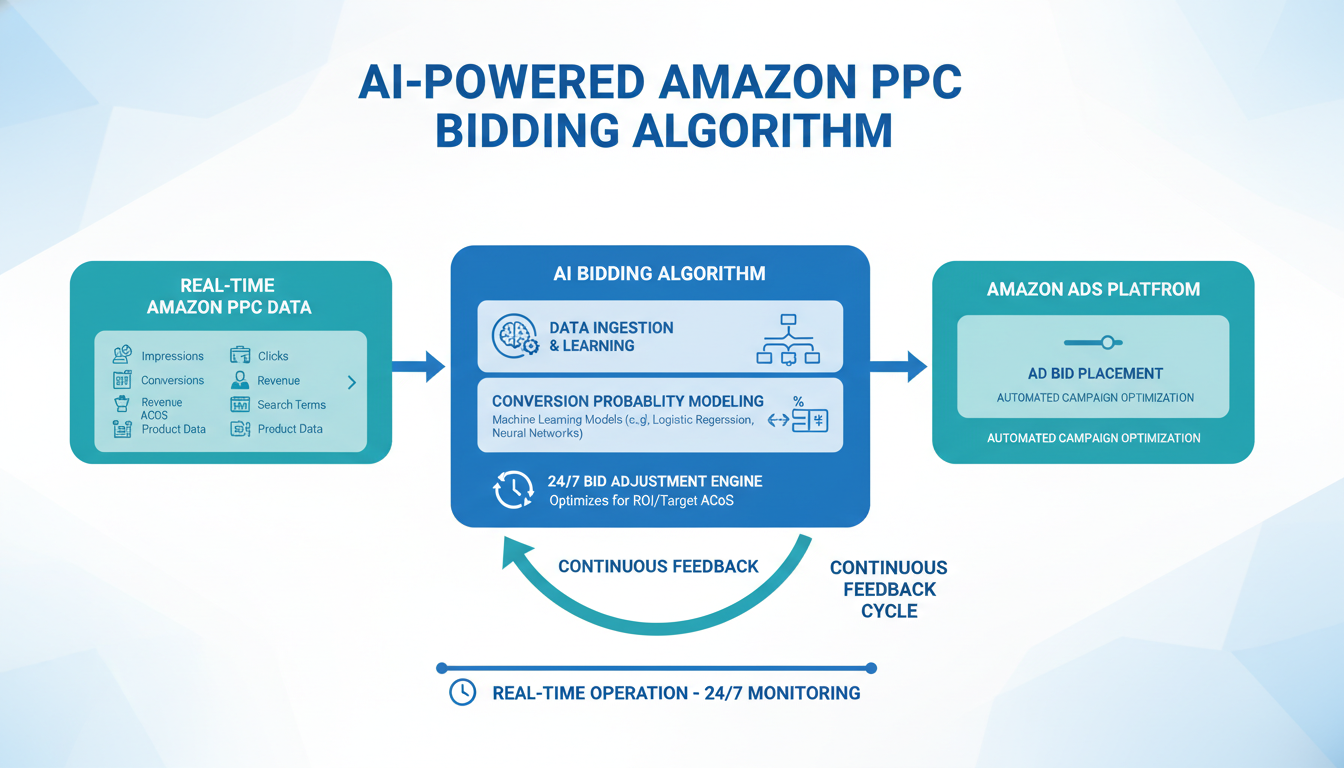
By integrating an intelligent ecosystem, sellers can shift from legacy "if-then" rule engines to cognitive models. These advanced tools not only automate routine tasks but actively predict buyer behavior. To explore this operational model in depth, utilizing AdAstraa's core platform offers enterprise brands a path to unified operations. By bridging the gap between media buying, creative iteration, and inventory metrics, sellers can avoid wasting budget on unprofitable campaigns.
Why Manual Amazon PPC and Legacy Rules Fall Short
Traditional amazon ppc software relied on static heuristics. A typical rule configured by a media manager might read: "If a keyword's ACoS exceeds 40% over the last 14 days, lower the bid by 10%." While this seems logical on the surface, it represents a fundamentally flawed, historical-looking methodology. Such rule-based automation marketing tools ignore key real-time market nuances and buyer context, creating severe limitations:
- Reactionary Latency: Manual systems make bid changes after the waste has already occurred. True ai in ads models can project conversion degradation before bids are placed.
- Lack of Intraday Dynamism: Shopper behavior changes drastically throughout the day. Legacy tools cannot dynamically modify hourly bids based on historical dayparting patterns.
- Inefficient Scaling: Running hundreds of campaigns across thousands of ASINs manually is an operational bottleneck. It leaves brands vulnerable to fast-acting competitors using amazon ads automation.
- The Silhouette Problem: Legacy bidders evaluate keywords in isolation, failing to account for how a sponsored brand ad impacts organic visibility or total market share.
"Relying solely on historical metrics to set real-time bids is like driving a car while only looking at the rearview mirror. AI changes the paradigm from retrospective adjustments to predictive bid optimization."
The Core Pillars of a Modern AI Advertising Engine
To build a sustainable amazon advertising strategy, brands must coordinate multiple AI-driven capabilities. This integration addresses the three key components of digital advertising: bid optimization, creative variety, and behavioral intent analysis.
1. Continuous Micro-Bid Adjustments (Autopilot)
Unlike humans, AI algorithms never sleep. They constantly evaluate live performance data to adjust bids up or down incrementally. This allows campaigns to target exact high-converting hours and avoid high-traffic but low-intent windows. Using an advanced amazon ppc tool equipped with autonomous bidding keeps your Advertising Cost of Sales (ACoS) tightly aligned with target margins.
2. AI-Powered Dynamic Ad Creatives (AdCreative+)
Sellers frequently struggle with creative fatigue, which occurs when target audiences grow tired of seeing the same static product imagery. A robust ai ad creator or an advanced ai advertisement generator can assemble diverse assets at scale. By generating multiple variations of lifestyle backgrounds, headline copy, and product positioning, these tools significantly reduce asset creation costs. To streamline your content pipeline, leveraging AdCreative+ allows brands to generate high-performing, brand-aligned visual assets instantly.

3. Direct Intent Intelligence (Shopper OS)
Winning the Amazon search algorithm requires understanding buyer behavior beyond basic keyword matches. Modern engines dissect user pathways, search trends, cart-abandonment rates, and contextual signals to target shoppers with precise timing. Integrating behavioral systems like Shopper OS helps brands identify and capture high-intent buyers, leading to improved customer lifetime value.
Comparing Amazon PPC Solutions: From Manual to Cognitive AI
To help you choose the right approach, here is a detailed breakdown comparing manual structures, traditional rule-based tools, and modern cognitive AI platforms:
| Capabilities | Manual Campaign Management | Rule-Based Software | Next-Gen Cognitive AI |
|---|---|---|---|
| Optimization Speed | Weekly or bi-weekly manual adjustments. | Scheduled daily script cycles. | Continuous, real-time 24/7 stream tracking. |
| Creative Generation | Requires professional photo shoots and agencies. | No built-in generation capabilities. | Automated variation testing using an AI ad generator. |
| Decision Parameters | Limited to individual, historical keyword metrics. | Simple "if-this, then-that" numerical thresholds. | Multi-variable analysis (pricing, stock, competitor actions). |
| Budget Management | Manual reallocation prone to human delay. | Strict budget caps that can halt active ads early. | Dynamic, fluid budget movement to maximize daily ROAS. |
Structuring an AI-First Amazon Advertising Strategy
Transitioning your brand to marketing automation using ai requires more than simply installing software; it demands a structured, system-wide strategy. To build high-performing marketing workflows, follow this operational blueprint:
- Establish Dynamic Target Guards: Instead of setting static bids, provide your ai ppc management system with clear target range guards (e.g., target ACoS between 25% and 35%). This allows the engine to autonomously scale up during periods of high search volume and scale back when traffic converts poorly.
- Automate the Keyword Lifecycle: Use automated tools to discover and manage keywords. The system can constantly analyze search terms, identify high-intent variations, add them as target keywords, and flag non-converting phrases as negative match keywords.
- Coordinate Creative Variations: Utilize an ai ads creator to build varied custom creatives for your target segments. Testing multiple lifestyle backgrounds helps identify the variants that yield the highest CTR and lowest CPA.
- Connect Inventory Metrics to Campaigns: Link your advertising setup directly to inventory management software. This ensures your system automatically lowers ad spend for low-stock items, protecting organic rank and preventing out-of-stock fees.
This programmatic approach aligns closely with broader industry trends. According to Sitruna's breakdown of Amazon's AI advertising capabilities for 2025, upcoming platform innovations are shifting toward deeper first-party data integrations and highly personalized, real-time ad targeting.
Leveraging Generative Creatives for Multi-Channel Scaling
Modern artificial intelligence ads expand far beyond simple Sponsored Products keyword targeting. Brands looking to capture market share must build omni-channel experiences using Sponsored Brands, Sponsored Display, and off-platform DSP placements. Historically, the high cost of image and video production made running multi-channel campaigns cost-prohibitive for all but the largest enterprise brands.
Today, an ai tools for advertising suite can generate diverse image variations from a single product photo, drastically reducing production times. These tools place products in rich lifestyle settings, alter seasonal backgrounds, and adjust ad layouts to appeal to different buyer profiles.
This seismic shift was a key topic at Amazon's flagship seller event. As noted in Tinuiti's analysis of Amazon Unboxed, the launch of autonomous agentic tools—such as the Creative Studio and AI-driven Audio generator—democratizes access to high-tier media assets. This transition empowers smaller, agile teams to run highly sophisticated campaigns that were once only possible for global agencies.
Tackling Ad Waste to Protect Your True Profit margins
A common mistake in e-commerce marketing is evaluating performance solely on "blended ROAS" or top-line revenue growth. In reality, these metrics can mask underlying operational waste. True brand growth requires maximizing "True Profit" on an individual ASIN level after subtracting manufacturing costs, FBA fees, storage costs, return rates, and ad spend.
An AI-driven amazon ppc automation tool helps eliminate ad waste by tracking efficiency at a granular level:
- Negating Non-Converters: Automatically identifies search terms with high clicks but zero sales, shifting them to negative keywords to preserve budget.
- Adjusting for Cannibalization: Recognizes when your ad placements are aggressively bidding on your own high-ranking organic keywords, preventing you from buying clicks you would have received for free.
- Adjusting for Out-of-Stock Risk: Pauses high-volume campaigns for inventory that is running low, allowing you to sustain organic velocity without stocking out.
- Optimizing Low-Performing ASINs: Reallocates budget from low-conversion products to items with strong conversion rates and healthy profit margins.
A Blueprint for Transitioning to AI Ad Platforms Safely
Adopting an automated PPC management setup can feel daunting for teams accustomed to hands-on control. To ensure a smooth transition and maintain performance stability, use this progressive integration playbook:
The Step-by-Step Transition Protocol
- Phase 1: Observation & Data Ingestion (Days 1–7): Connect your automated tools to your Amazon Seller Central account in "read-only" or tracking mode. This allows the algorithms to ingest historical data and identify seasonal trends without making active changes.
- Phase 2: Targeted Testing (Days 8–21): Move a small, defined subset of your catalog—such as your secondary or mid-tier SKUs—to the active AI bidding platform. This allows you to evaluate bid stability, search term discoveries, and budget management on a low-risk test group.
- Phase 3: Optimization Scaling (Days 22–45): Once performance on your test SKUs stabilizes, gradually transition your core best-sellers to the platform. Establish clear target metrics (like target ACoS or TACoS) and let the algorithms take over day-to-day operations.
- Phase 4: Creative and Strategic Scale (Day 46+): Integrate generative tools like an ai powered ad creative studio to continuously build, test, and refresh campaign visual assets.
The Future of E-commerce Belongs to Autonomous Brands
In the fast-evolving Amazon marketplace, the gap between traditional manual sellers and tech-enabled brands continues to widen. Success is no longer determined solely by who has the highest advertising budget, but by who can leverage historical and real-time data most efficiently.
By implementing a comprehensive stack that combines amazon ppc automation, automated creative production, and behavioral intent analysis, brands can scale their advertising efforts sustainably. This shift frees up valuable operational hours, allowing team members to move away from tedious spreadsheet adjustments and focus their attention on high-level strategy, product expansion, and brand building.